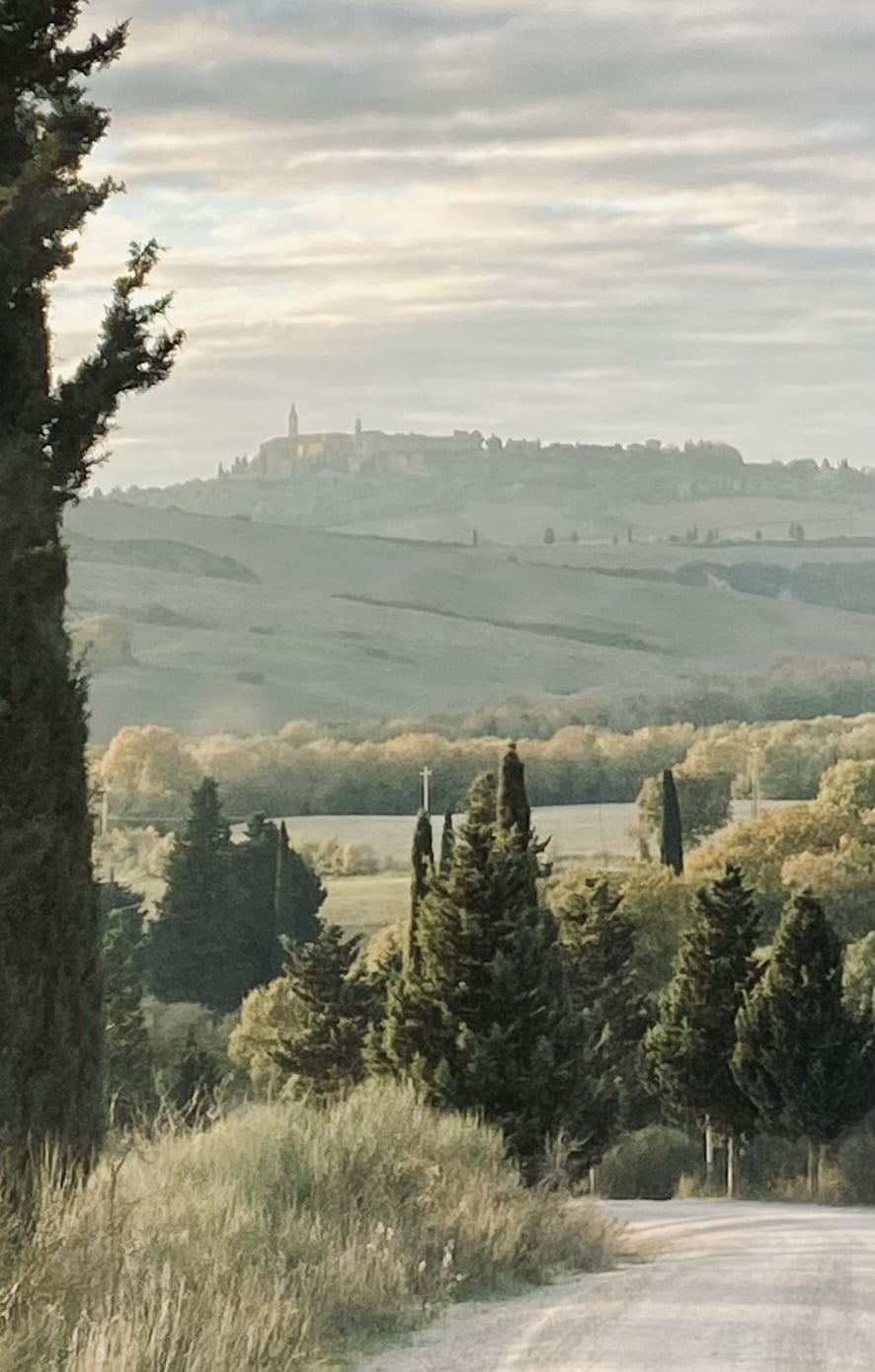
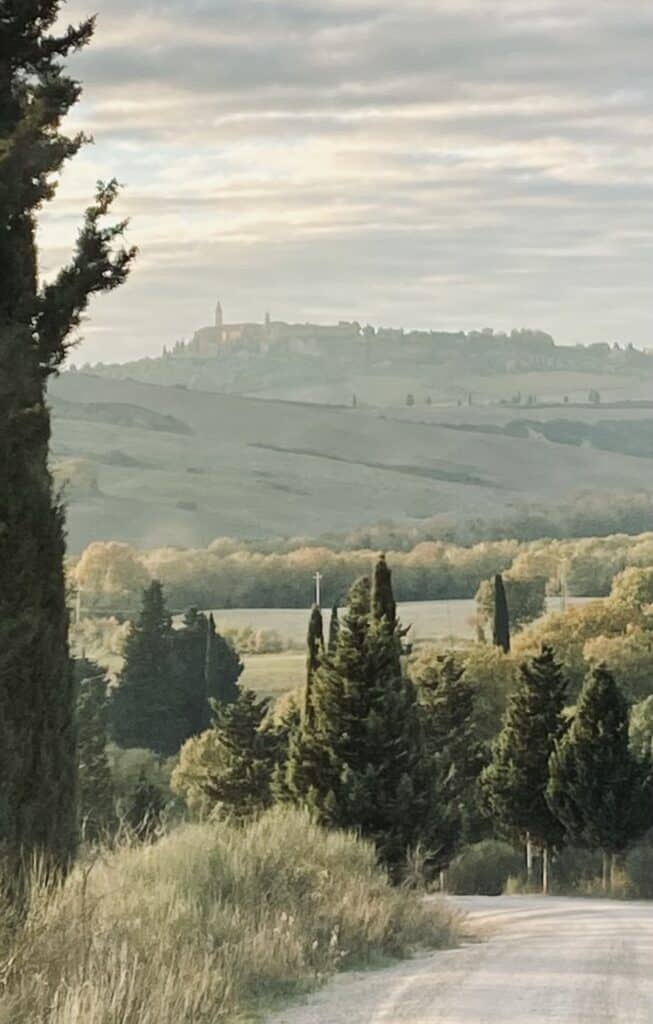
They’re neighbors. You can see one from the other on clear days.
Both lie within the UNESCO-listed Val d’Orcia landscape. Both are medieval hill towns. Both are postcard-perfect.
And yet they couldn’t be more different.
Montepulciano is vertical, dramatic, alive with locals. Pienza is horizontal, refined, built for beauty.
One is a working town that happens to be beautiful. The other is a Renaissance dream made of stone.
ABBADIA WINE RELAIS, our adults-only hideaway, surrounded by vineyards, silence, and space, is perfectly located between Val d’Orcia, Pienza, and Montepulciano. Both towns can be easily reached in under 20 minutes.
Here’s how to choose between them — or, better yet, experience both without compromising slow travel in Tuscany.
The Quick Answer
If you only have time for one:
Choose Montepulciano if you want:
- Lively Italian streets
- Famous Vino Nobile wines
- Steep climbs and medieval atmosphere
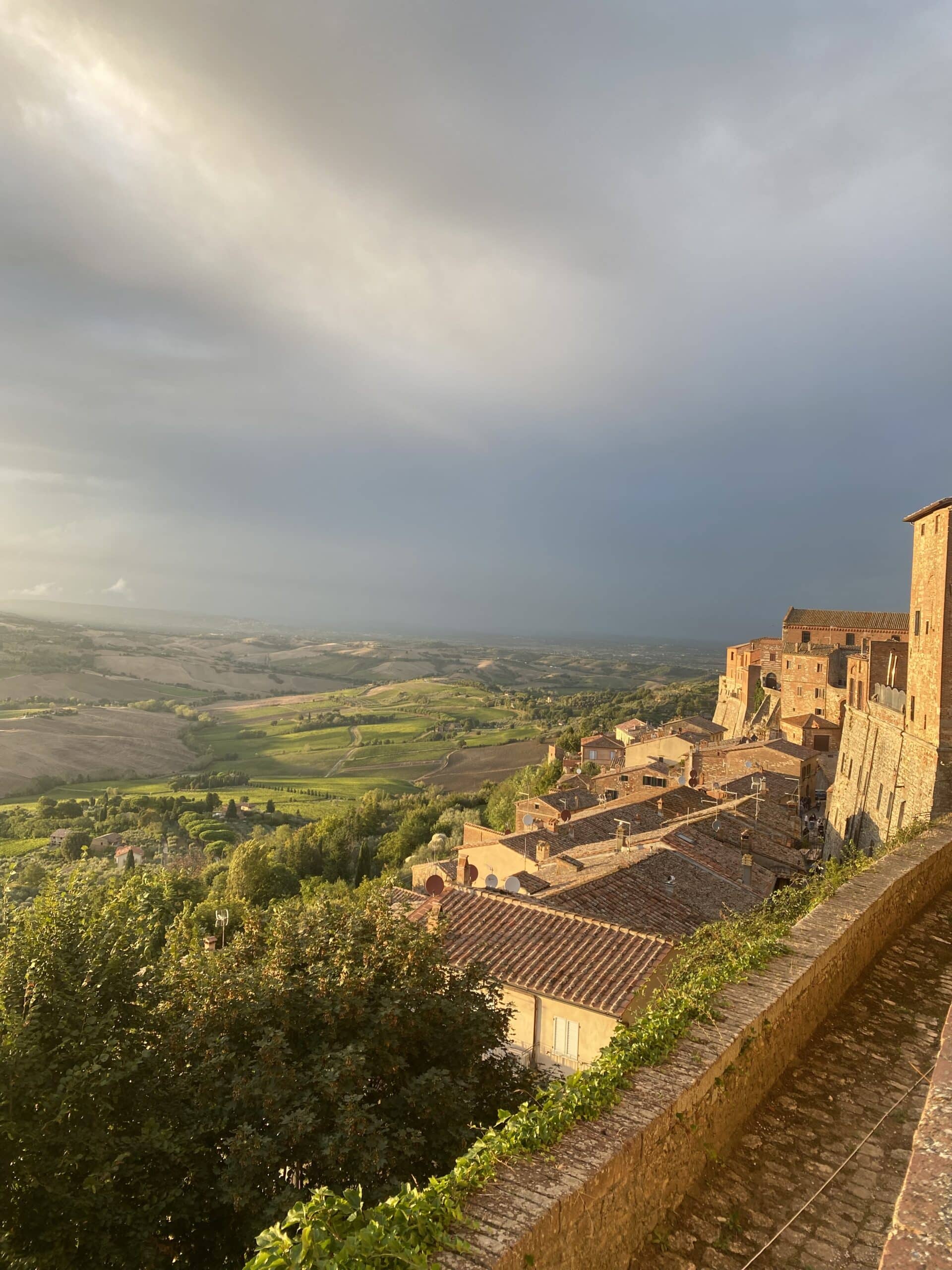
- Stunning far views from the top
- Broad choice of authentic and fine restaurants
Choose Pienza if you want:
- Perfect Renaissance architecture
- Pecorino cheese in all flavors
- Flat walking and easy access
- Instagrammable views of Val d’Orcia
- Tiny, perfect, full of charm
Our honest take: Do both. They’re 15 minutes apart. Two different mornings. For completely different moods.
Montepulciano: The Vertical Town
Distance from ABBADIA WINE RELAIS: 15 minutes
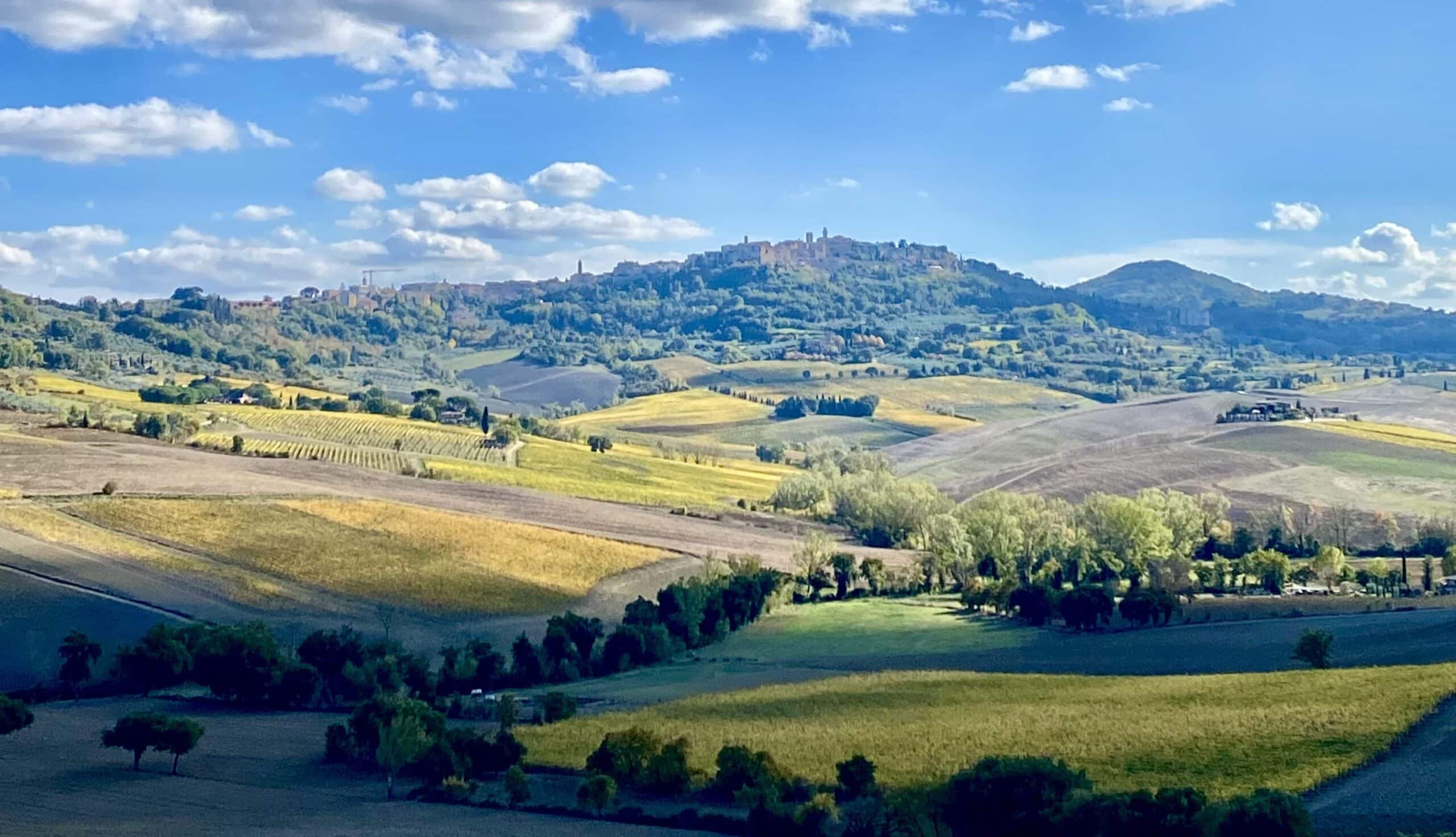
Setting: A long, steep hill town stretched along a ridge. Medieval walls. Renaissance palazzi. Working town with 14,000 residents who actually live here year-round. No set piece. No museum. Real Italian life in motion. One of the most iconic hill towns of the Val d’Orcia — and all of Tuscany.
What Makes It Special:
The climb:
Montepulciano is vertical. The main street (Corso) climbs from Porta al Prato (bottom gate) to Piazza Grande (top) — about 1.5km uphill.
Steep. Cobblestoned. Still worth it.
The reward: Views at the top that make you forget your burning calves.
The wine:
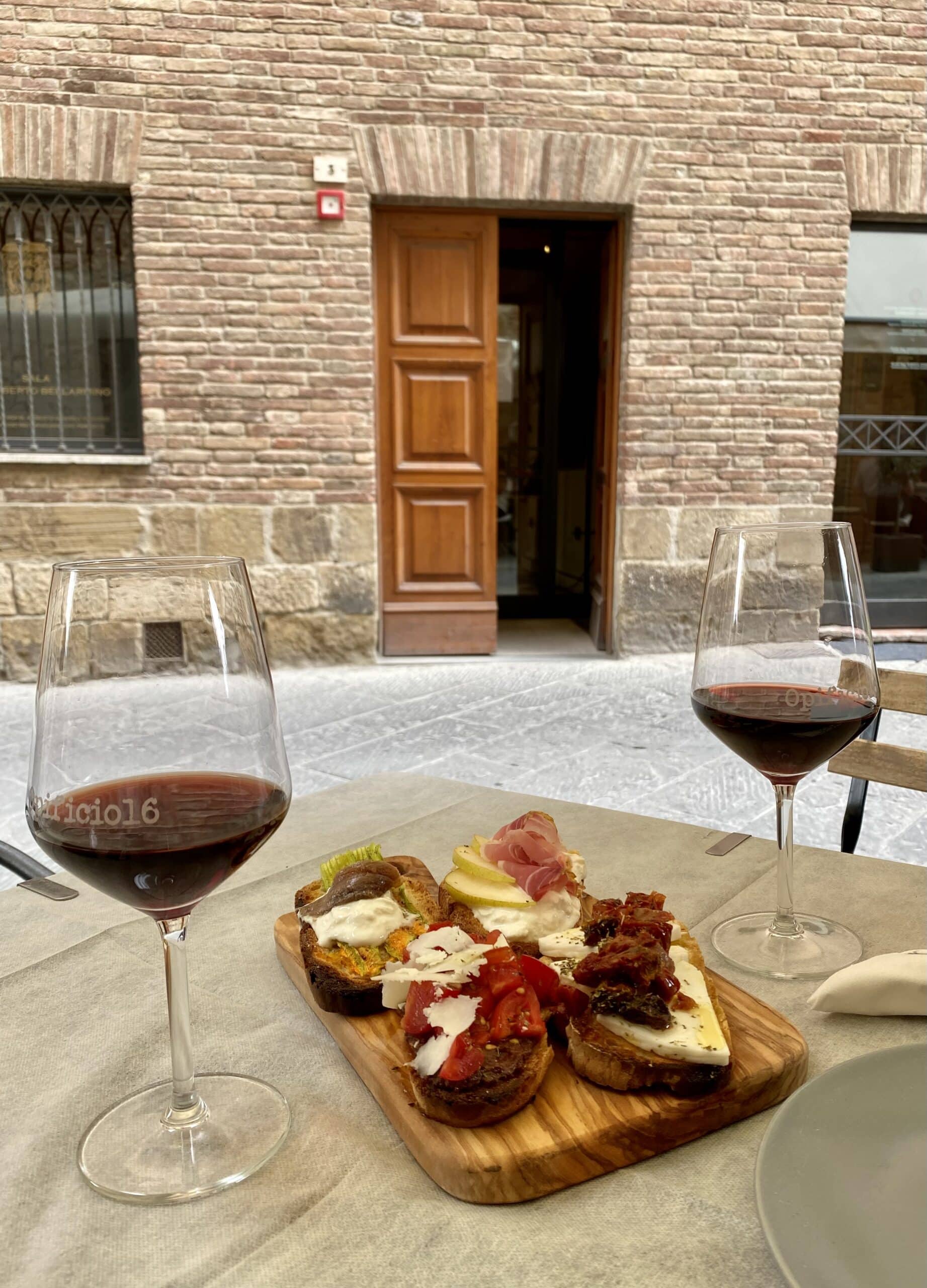
Vino Nobile di Montepulciano. Serious wine. DOCG classification. Sangiovese-based, structured, ages beautifully.
Dozens of wine cellars (cantine) line the Corso. Many offer tastings, but most cater to day-trippers. For a truly authentic experience, wander a few steps off the main street — or for a truly authentic experience, head a few minutes out of the city to the wineries themselves.
The vibe:
Real Italian life happens here. Locals shopping for groceries. Kids playing in piazzas. Bars full of old men arguing about football. Laundry hanging from medieval windows.
It’s not a museum. It’s a functioning town that happens to be stunning.
The size:
Big enough to get slightly lost. Small enough to find your way. Takes 2-3 hours to climb, explore, and descend properly.
What to See in Montepulciano:
Piazza Grande (top of town):
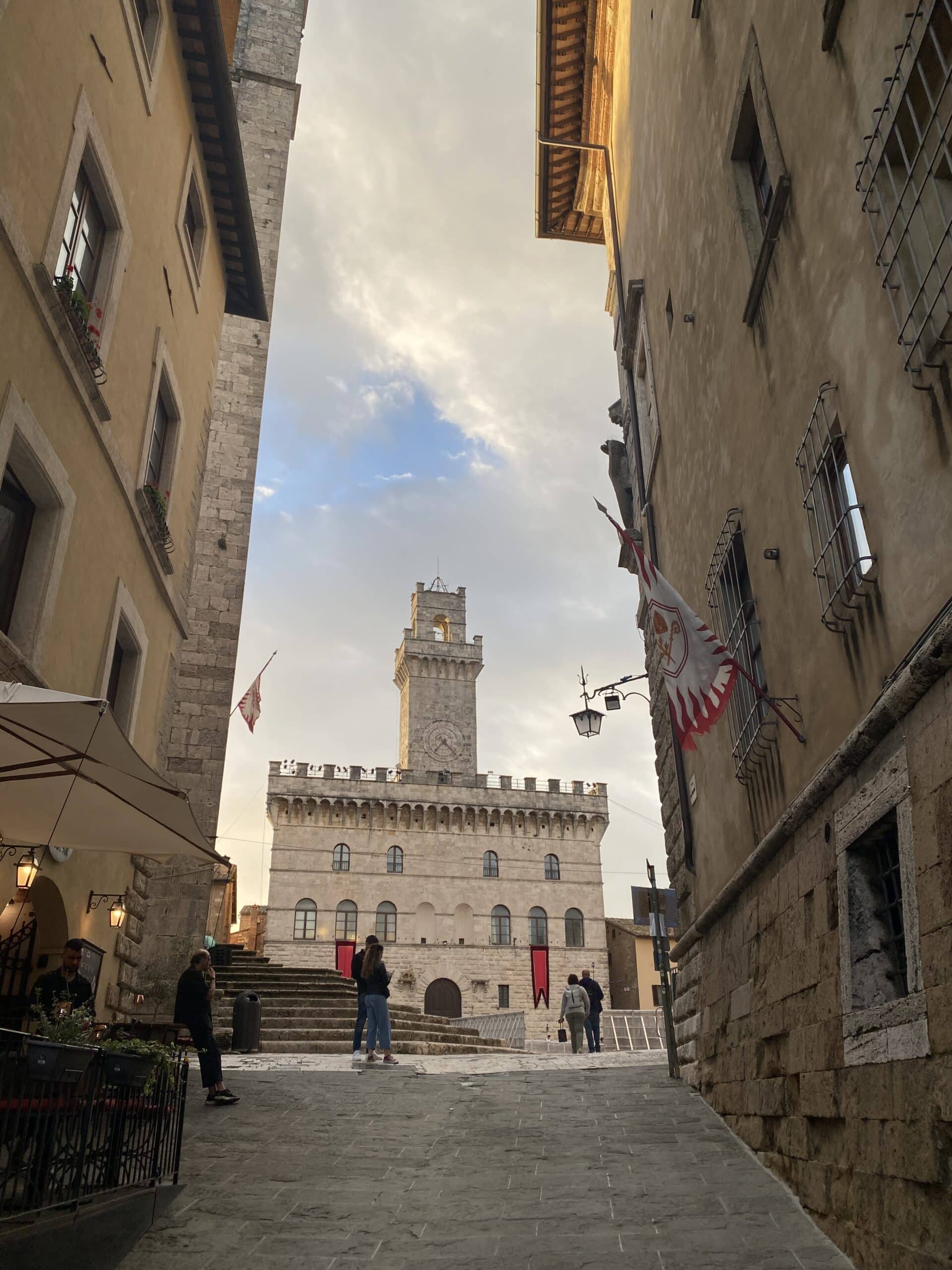
The main square. Medieval town hall (Palazzo Comunale) on one side. Duomo (cathedral) on the other.
Climb the tower (Palazzo Comunale) for 360-degree views. 374 steps for EUR 5. Completely worth it. On clear days, you see Pienza, Montalcino, even Siena.
The Duomo:
Unfinished brick facade (they ran out of money — very Italianl). Beautiful inside. Free entry.
Not the most impressive cathedral in Tuscany, but atmospheric.
Wine cellars along the Corso:
Too many to list. A few worth knowing:
- Contucci (Piazza Grande) – Historic cellar, free tasting, no pressure to buy. Family-run since 1700s.
- De’ Ricci (Via Ricci, near bottom) – Massive underground cellars. Beautiful barrels. Tasting EUR 15-20 per person.
- Cantina Gattavecchi (Via di Collazzi) – Off the main drag, less touristy, good wines.
Our advice: Skip the cellars with aggressive touts outside. Find the quieter ones.
Sant’Agnese church:
Halfway up the Corso. Often overlooked. Baroque interior, surprisingly beautiful. Usually empty. Free.
Fortress (Fortezza):
At the very top, past Piazza Grande. Partially ruined. Great views. Free to wander.
The side streets:
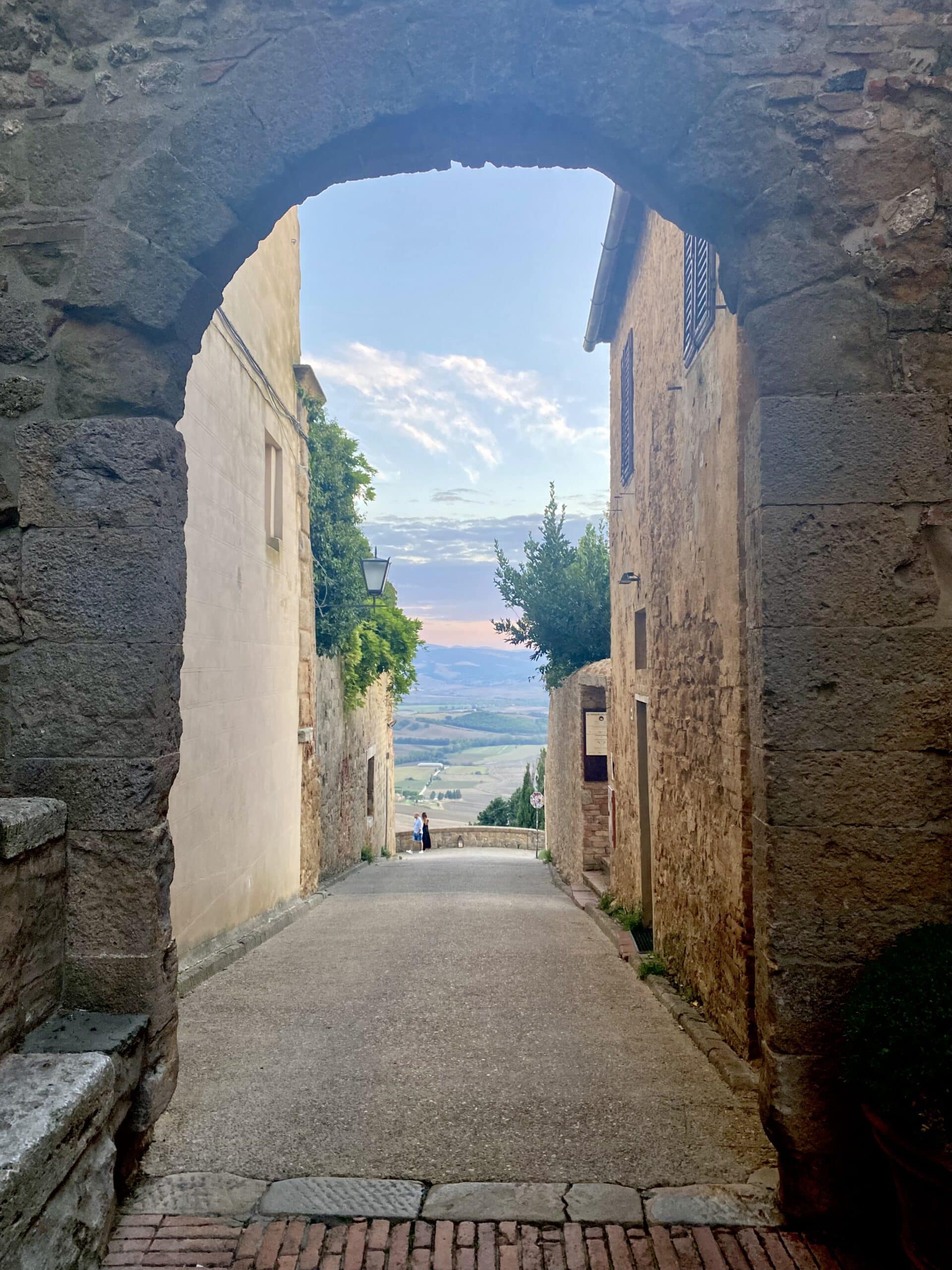
The best of Montepulciano isn’t on the Corso. Duck into side alleys. Quiet piazzas. Hidden courtyards. Medieval wells. Cats sleeping on ancient stones.
Tempio di San Biagio
Just outside Montepulciano’s city walls, at the foot of the hill, stands the Tempio di San Biagio. A perfectly proportioned church, Renaissance in its purest form. The white marble façade catches the light, while inside there is complete calm. Harmonious domes, clean lines. You can feel it immediately: here, it was all about balance, perspective, and beauty.
A perfect way to end a morning in Montepulciano.
Where to Eat in Montepulciano:
Osteria Acquacheta (Via del Teatro, 22)
Famous for bistecca (massive Florentine steaks shared between two). Loud, chaotic, fun. Reservation is a must — to arrive either 7.30 or 9.30pm. Giulio works in two shifts.
Not romantic. But definitely memorable.
La Grotta (Località San Biagio, 15)
Just outside town near San Biagio church. Elegant, quieter, with a small garden terrace, excellent food, elevated cuisine. Great wine list. Comes with a price. Reservations recommended, especially for summer evenings.
Rosso Rubino (Via dell’Opio Nel Corso, midway to the top)
Small, intimate, best hand-made pasta. Only inside eating.
Caffè Poliziano (Via di Voltaia nel Corso, 27)
Historic café. Art Nouveau interior. Good for coffee, sweets, aperitivo, people-watching. It has been here since 1868.
Our take:
Montepulciano has real restaurants, not just tourist traps. Because locals eat here too, quality stays high. Authentic Tuscan experierences.
When to Visit Montepulciano:
Best: Weekday mornings (Tuesday-Thursday, 9-11am). Town wakes up slowly. Shops open. Locals out for coffee. Climb the Corso before crowds.
Avoid: Saturday afternoons (busiest). Sunday mornings (shops closed). August afternoons (too hot for the climb).
Events:
- Bravio delle Botti (last Sunday of August) – barrel-rolling race through town. Locals care deeply. Tourists think it’s charming. Both are right.
- Anteprima del Vino Nobile (February) – The new year’s wines are unveiled at the Fortezza Medicea. Taste Vino Nobile, Rosso di Montepulciano, and Vin Santo.
- Christmas Market (late November–early January) – Montepulciano transforms into a festive winter village. Wooden stalls, lights, and seasonal charm fill the historic center.
Pienza: The Perfect Town
Distance from ABBADIA WINE RELAIS: 20 minutes
Setting: Pienza sits at the gateway to Val d’Orcia. Renaissance “ideal city” designed by Pope Pius II in the 1450s. Tiny. Horizontal. Perfectly proportioned. Built to be beautiful.
What Makes It Special:
The design:
Most medieval towns grew naturally. Pienza was architected.
Pope Pius II transformed his tiny, humble birth town Corsignano to create the perfect Renaissance town. He succeeded. Straight streets. Harmonious proportions. Every building fits. The result feels almost too perfect — like a film set.
The cheese:
Pecorino di Pienza. Sheep’s milk cheese. Made in the hills around town. Aged in caves and barrels.
Fresh (fresco). Semi-aged (semi-stagionato). Aged (stagionato). Aged in walnut leaves. Aged in hay. Aged in ash. With truffels. With gorgonzola. You name it.
Every shop sells it. Most offer free tastings. You’ll leave with cheese. Accept this.
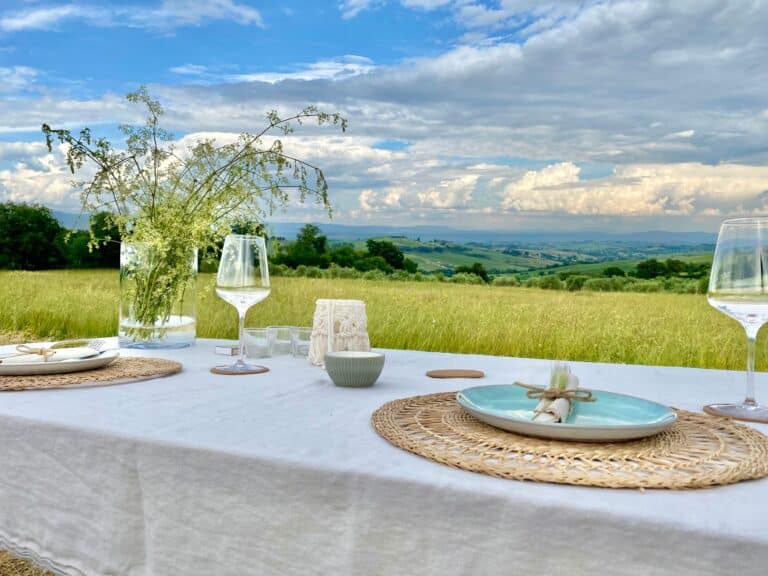
This cheese is a must for every romantic vineyard picnic we arrange for our guests — and it goes perfectly with our wines.
The views:
Pienza sits on a ridge. The town itself is small — you can walk end-to-end in 20 minutes.
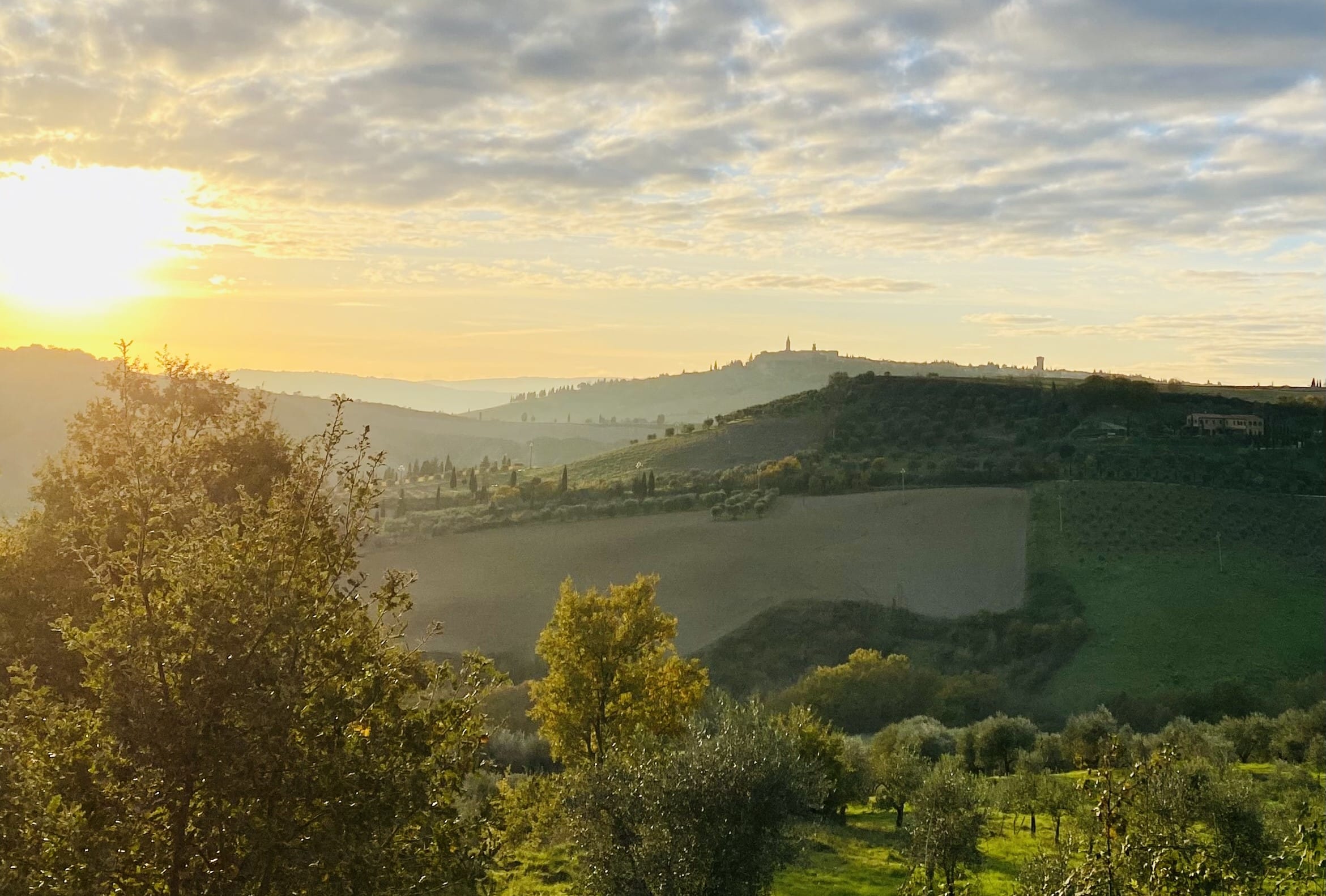
But the views behind it (from the ramparts and gardens) stretch across Val d’Orcia. The classic Tuscan landscape. The one from Pinterest boards and screensavers.
The size:
Tiny. You can “do” Pienza in 90 minutes. Walk the main street (Corso Rossellino). See the Duomo. Buy cheese. Done.
This isn’t a criticism. Pienza knows what it is. Small, perfect, and is proud of both.
What to See in Pienza:
Corso Rossellino (main street):
Runs straight through town. Cheese shops on both sides. Every third shop sells pecorino.
Free tastings at most. They’ll offer you 8-10 varieties. Try them all. Buy what you like. No pressure (mostly).
Piazza Pio II:
The central square. Cathedral (Duomo) on one side. Palazzo Piccolomini (papal palace) on the other.
Perfectly proportioned. This is what Renaissance urban planning looks like.
The Duomo:
Renaissance church. Light, airy, elegant. Cracks in the structure (it’s slowly sinking). Still beautiful.
Free entry. Worth 15 minutes.
Palazzo Piccolomini:
Pope’s summer palace. You can tour the interior and hanging garden.
Entry: EUR 7. Views from the garden are exceptional. The rooms are interesting if you care about Renaissance papal life.
The ramparts and views:
Walk to the back of town (behind the Duomo). Small park and ramparts.
This is where you get THE view. Val d’Orcia spreading below. Cypress lines. Rolling hills. Mt. Amiata in the distance.
Free. Best light: morning or late afternoon.
The back streets:
Unlike Montepulciano, Pienza has almost no hidden corners. It’s small and planned. But still worth ducking down side streets — quieter, fewer tourists.
Where to Eat in Pienza:
La Buca delle Fate (Corso Rossellino, 38)
Tuscan classics served in a busy vaulted cellar. Good pici pasta. Decent wine list. Central location. Reservations helpful.
Trattoria Latte di Luna (Via San Carlo, 2-4)
For lunches only. Just off the main street. Locals eat here. Simpler, less expensive than tourist spots. Good, honest food.
Sette di Vino (Piazza di Spagna, 1)
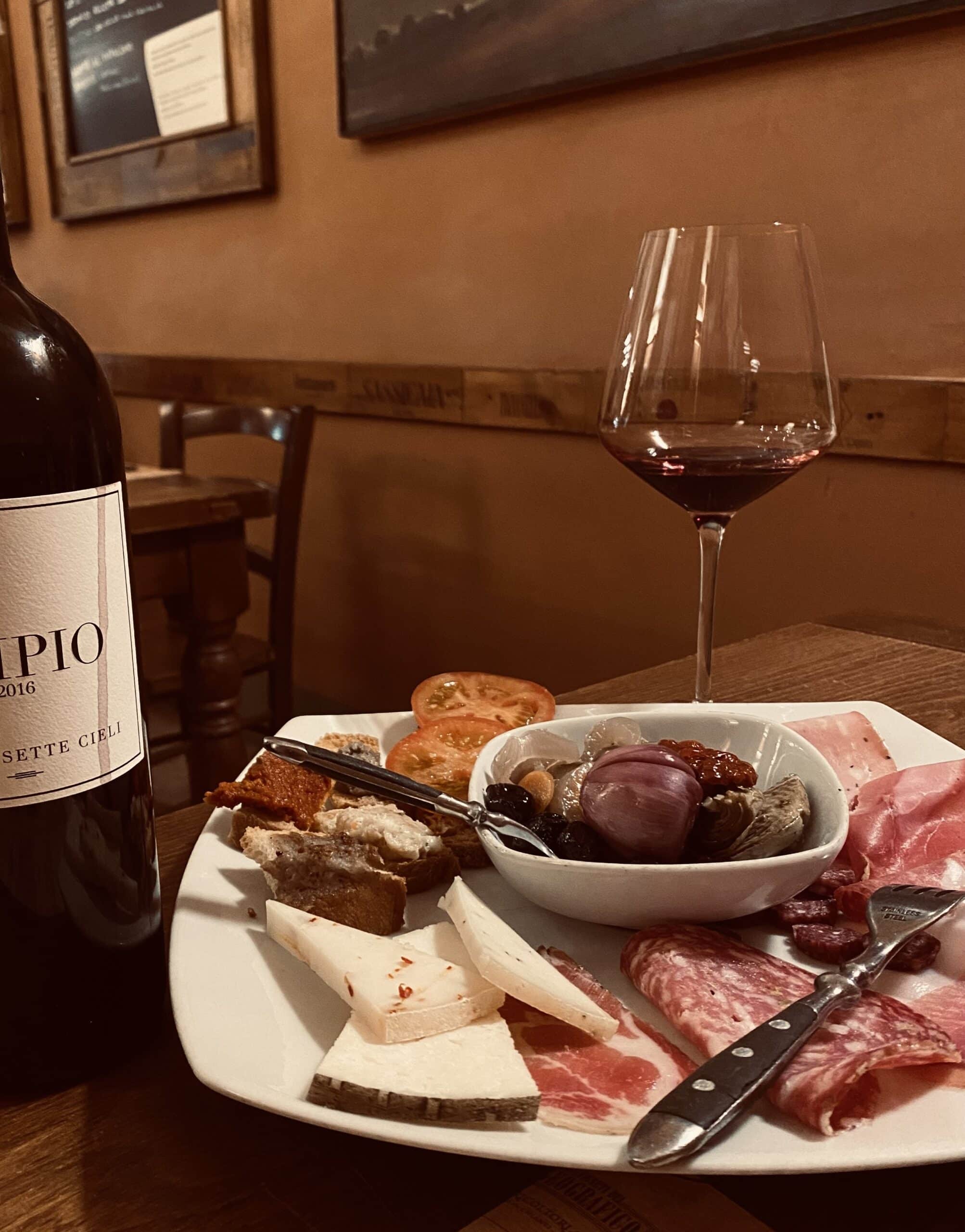
Wine bar. Good for aperitivo, cheese plates, light Tuscan dishes. Excellent local wine selection.
Sperone Nudo (Piazza di Spagna)
A small spot focusing on local Tuscan products, with a modern twist. Great cooking, good pasta, authentic — but unique. Has an outside eating area. Reservations recommended, inside it’s tiny.
Buon Gusto Gelateria (Corso Rossellino)
Best gelato in town. Possibly best in Val d’Orcia. Small, artisanal. Skip dessert at the restaurant and take away a bowl or two instead. You’ll love it.
Our take:
Pienza restaurants are fine. But the town is more about the experience — walking, views, cheese — than culinary destination dining. We’re complaining at the highest level here. Well understood.
When to Visit Pienza:
Best: Early morning (8-9am). Town is quiet. Shops just opening. You’ll have streets mostly to yourself.
Late afternoon (5-6pm) also good. Tour groups gone. Locals out for passeggiata (evening stroll).
Avoid: Mid-morning to early afternoon (10am-3pm). Peak tour bus time. The main street becomes a human river.
Events:
- Fiera del Cacio (first Sunday of September). Cheese festival. Rolling pecorino wheels, tastings, competitions. Town floods with visitors. Fun if you love cheese. Chaos if you don’t.
- Pienza e i Fiori – every May, the town transforms for around two weeks into a paradise of color and fragrance. Squares and historic buildings bloom, market stalls and small events fill the streets.
- Italy Summer Music Pienza – in late summer, roughly from late July to early August, classical concerts fill the Church of San Francesco. Young musicians play violin, viola, and piano. A must-see for anyone who loves music.
Montepulciano vs Pienza: Head to Head
Size:
- Montepulciano: Big enough to explore. 2-3 hours minimum.
- Pienza: 90 minutes covers it.
Difficulty:
- Montepulciano: Steep climb. Not accessible for mobility issues.
- Pienza: Easy walking. Accessible (mostly).
Crowds:
- Montepulciano: Busy but dispersed. Big enough to find quiet corners.
- Pienza: Concentrated crowds. Feels packed mid-day.
Authenticity:
- Montepulciano: Real town. Locals live here. Grocery stores, schools, life.
- Pienza: More museum-like. Tourism-focused. Still lovely, but less “real.”
Food:
- Montepulciano: Better restaurant options. More variety.
- Pienza: Decent but not destination-level. Gelato is excellent though.
Shopping:
- Montepulciano: Wine-focused. Cantine, wine shops, some crafts.
- Pienza: Cheese-focused. Pecorino everywhere. Some ceramics and linen.
Views:
- Montepulciano: Dramatic 360-degree from the tower. You’re high up.
- Pienza: Classic Val d’Orcia vista. The postcard view. Lower elevation but perfectly framed.
Vibe:
- Montepulciano: Alive. Slightly chaotic. Working town.
- Pienza: Refined. Quiet. Like a museum you can walk through.
What to Buy
Romantic souvenirs from Montepulciano and Pienza
From Montepulciano:
Wine: Naturally, the star is Vino Nobile di Montepulciano. Buy directly from the estates for better prices and a more personal experience. Look for the Riserva label (aged for 3+ years). We like Le Bèrne, Il Molinaccio, and La Ciarliana.
High-Quality Leather: For premium bags, belts, and jackets made from vegetable-tanned Tuscan leather, visit Voltaia28. Meanwhile, Maledetti Toscani is legendary for its handcrafted, “indestructible” leather boots and rugged bags.
Home Fragrances & Perfumes: Visit Erbario Toscano, a renowned brand featuring signature scents like Bacche di Tuscia or Legno di Vigna. Alternatively, Bolgherello is a fantastic specialist shop for authentic Profumi di Toscana.
Fashion: You will find several charming boutiques offering Italian newcomer labels and refined fabrics away from the mass market. Check out Del Santo Cashmere or Fatamorgana. Maledetti Toscani also offers a great selection of unique clothing.
Copper Art (Bottega del Rame): A true Montepulciano original. Here, the Bianchini family crafts hand-hammered copper pots, pans, and decor in their workshop—a genuine piece of master craftsmanship.
From Pienza:
Pecorino di Pienza: The absolute classic. Have it vacuum-sealed for your journey home.
Truffle Specialties: Whether it’s truffle oil, truffle honey (the perfect pairing for cheese), or savory spreads, the area surrounding Pienza is a premier truffle region.
Cinta Senese Salami: Look for cured meats made from the protected Tuscan “Cinta Senese” pig breed. The salami and air-dried ham make for excellent, authentic souvenirs.
Ceramics: Pienza offers beautiful, hand-painted Tuscan ceramics. Look for bowls or vases decorated with iconic Val d’Orcia motifs like cypress trees and sunflowers.
Handwoven Linen: In the town’s side streets, you will find traditional weavers like Altroieri or Made in Tuscany | Pienza. They produce high-quality tablecloths, napkins, and scarves made from fine linen and cotton.
Parking
Montepulciano:
Stay outside the walls: There are 8 numbered parking lots. If possible, aim for Parcheggio 1 (P1) near Porta al Prato (Cost: approx. EUR 2–3/hr). Always pay for your ticket; they enforce parking rules strictly here.
Never drive up. The main street (Corso) is narrow, steep, and you’ll hate yourself. Park and walk.
If you want to skip the steep walk, take the small city bus called “Pollicino” from Porta al Prato up to Piazza Grande. It runs every 30 to 40 minutes—just expect some “Italian-style” punctuality.
Try your luck: park at the very top in Parcheggio 7 (Fortezza). It saves you the uphill climb, but finding a free spot there is pure luck.
Pienza:
Park outside town walls (Parcheggio Pienza). EUR 1.50-2/hour.
Centro storico is ZTL (restricted). Don’t drive in. Cameras will photograph you. Juicy fines arrive later.
Park once, walk everywhere. Town is tiny.
Common Questions
"Can we do both Pienza and Montepulciano in one morning?"
Technically yes. Rush through both in 3 hours. But why? You’ll miss everything that makes them special.
If you only have one morning, pick one. If you have more time here, then read our guide for the three perfect days in Val dÔrcia.
"Do we have to see both?"
We think yes. They’re so different, yet complement each other perfectly—it’s hard to choose just one.
"Which is more romantic?"
That depends on what romance means to you.
Pienza is gentle, charming, made for slow walks and postcard-perfect moments.
Montepulciano is dramatic. Climbing the Corso together feels like a little shared adventure.
Both romantic for couples. Different styles.
"Which has fewer tourists?"
Montepulciano. Simply because it’s bigger.
Pienza is tiny—at the wrong time, it can feel crowded. Timing is everything.
"Do we need reservations?"
Restaurants: yes, if you have a particular place in mind. Otherwise, you can usually find something on the spot.
Tastings: most don’t require a booking—neither for wine nor for cheese.
Tours: the underground cellars in Montepulciano (Talosa, De’ Ricci) require reservations. Often you can book last-minute, but for certainty, reserve online.
Our Honest Recommendation
Visit both.
They’re 10 minutes apart. Completely different. Both beautiful.
Start with Pienza if you want easy introduction. Flat, small, manageable. Get the cheese. See the views. Done in 90 minutes.
Start with Montepulciano if you want the full hill town experience. Climb the winding streets, taste the wine, feel the energy. It takes longer—but every step is worth it.
Or do what most guests do: Both in one day. Morning in Pienza (before crowds). Afternoon in Montepulciano (slow climb, wine, lunch at top).
You’ll understand why people fall in love with Tuscany. And why these two towns, five kilometers apart, both made it onto the Val d’Orcia UNESCO list.
Different beauty. Same magic.
Ready to Explore Val d'Orcia?
ABBADIA is perfectly placed. Between the Val d’Orcia, Pienza, and Montepulciano.
20 minutes to Pienza. 15 minutes to Montepulciano. You can’t get closer.
When you arrive, ask us. For the best timing. Parking. A table worth your evening. Tell us what you feel like — we’ll handle the rest.
Or just go. Both towns are small enough to wander freely. Big enough to find a great meal on a whim. No plan. No pressure.
At the end of the day, return to ABBADIA.
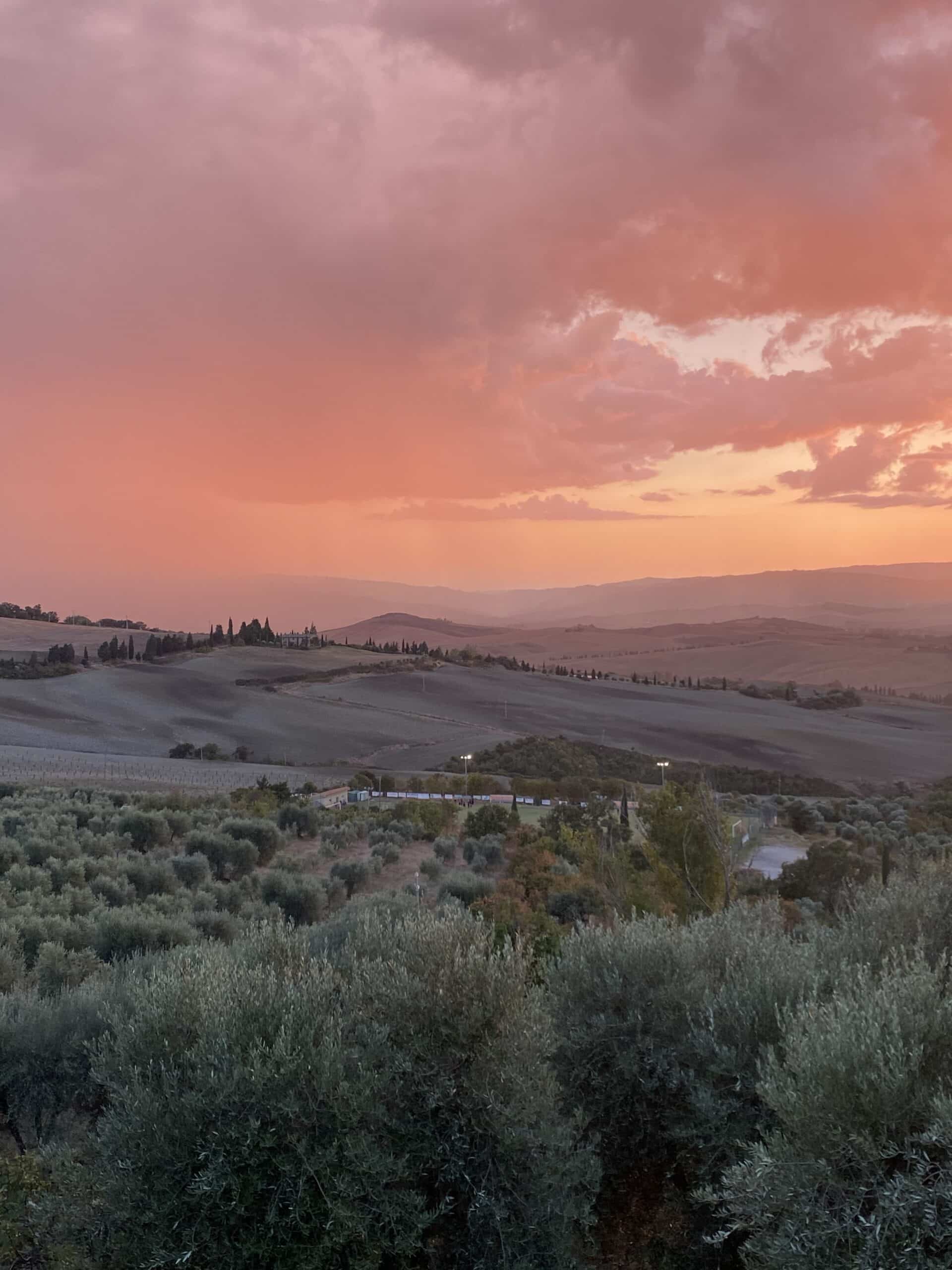
To quiet. To space. To the golden light spilling across the hills.
It’s no coincidence.
It’s luxury. It is our Silent Luxury.
Welcome to ABBADIA.
Welcome between Pienza and Montepulciano.