Many wineries build their identity around big names – famous enologists, biodynamic gurus, award-winning wine consultants.
Our approach is simpler: We make wine we want to drink ourselves.
Of course, we are fortunate to sit between two icons — Vino Nobile di Montepulciano and Brunello di Montalcino. Tuscany gives us extraordinary terroir. But what truly guides us is something more fundamental: honesty in the glass.
No headaches the next morning. No additives we can’t pronounce. Nothing that makes you wonder: if it kills all the bugs, why am I drinking it?
At ABBADIA WINE RELAIS, there are three sole ingredients: grapes, time, and honest work.
Here’s how we do it — and why it matters.
The Short Version
ABBADIA is our romantic adults-only hideaway and a small boutique winery in Tuscany, quietly nestled between Montepulciano and the Val d’Orcia, in one of the region’s most respected wine landscapes. 8 hectares of vineyards planted in 1998 and 2002. Certified organic since 2009.
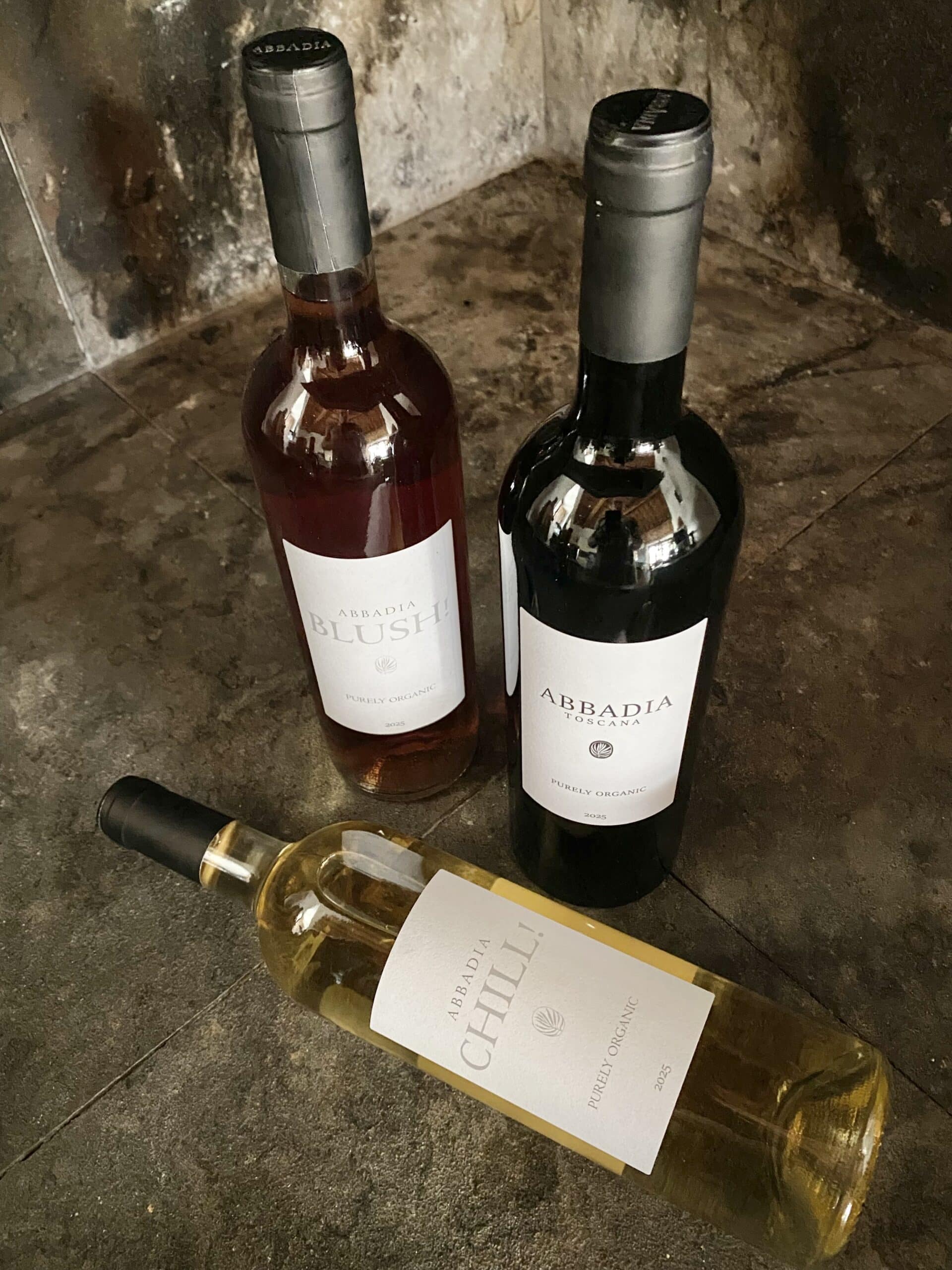
Today, we make about 6,000 bottles a year. Three reds (Merlot, Cabernet Sauvignon, Sangiovese), one white blend (Chardonnay, Sauvignon Blanc, Seyval Blanc), one rosé (from Merlot).
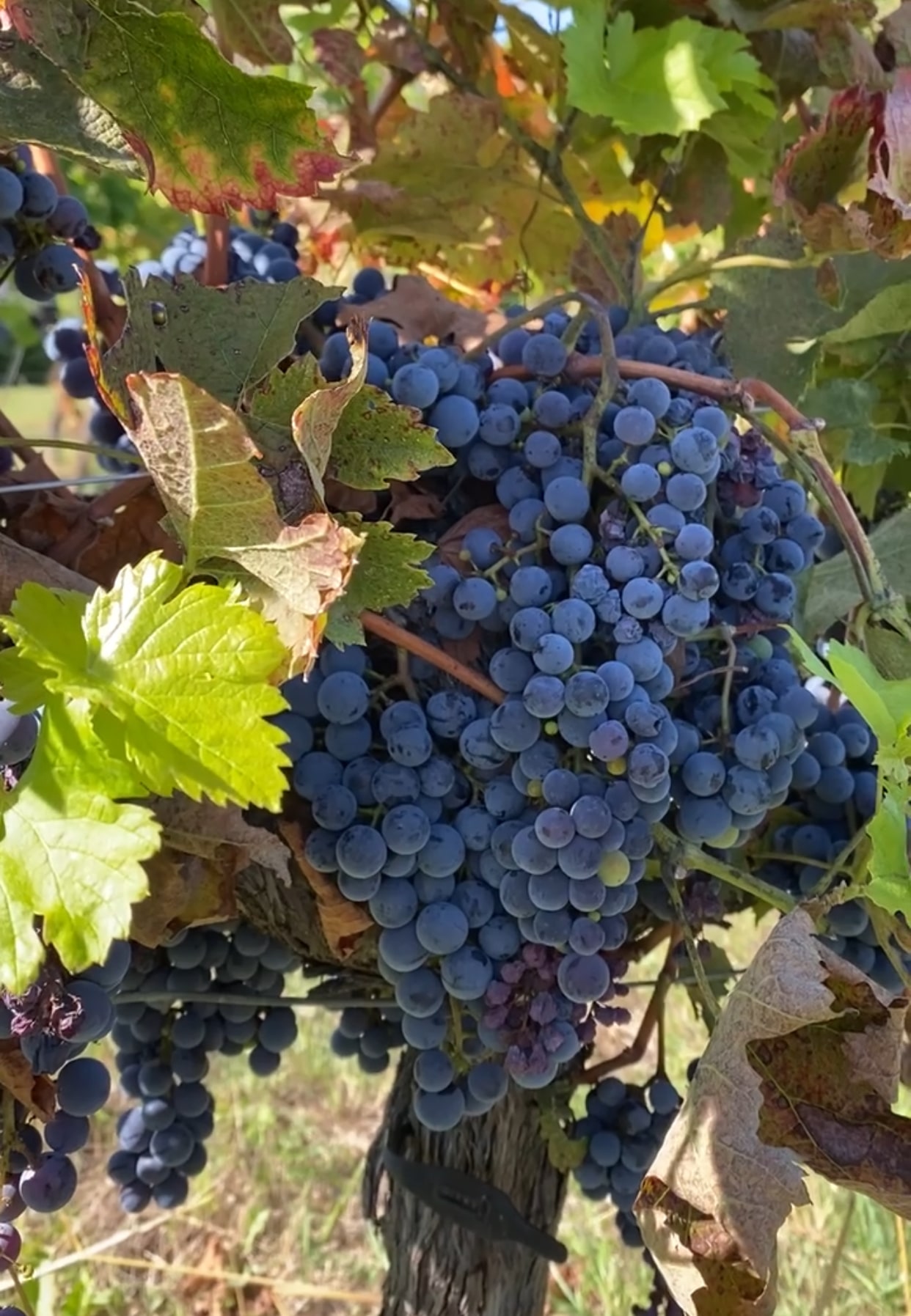
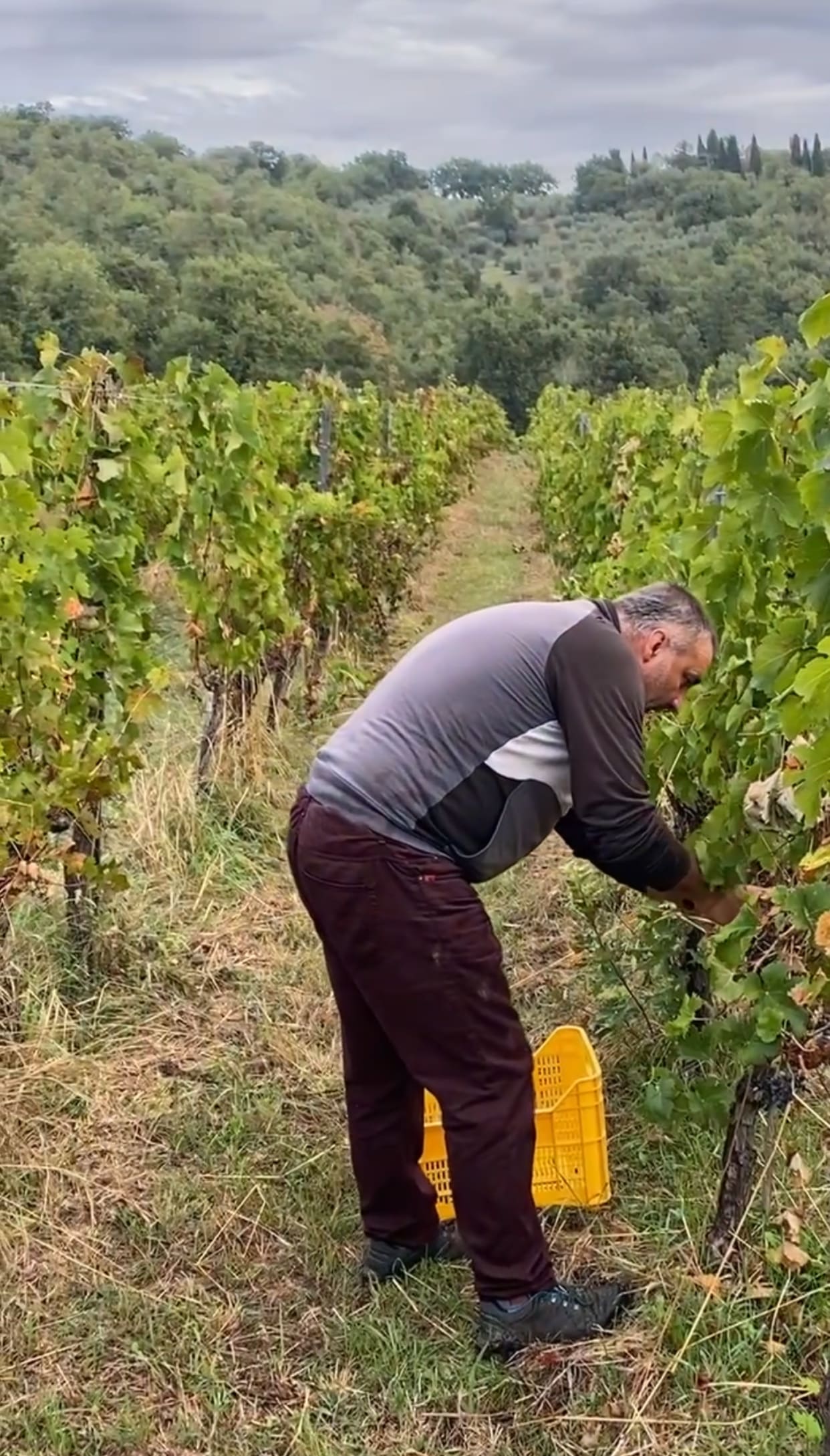
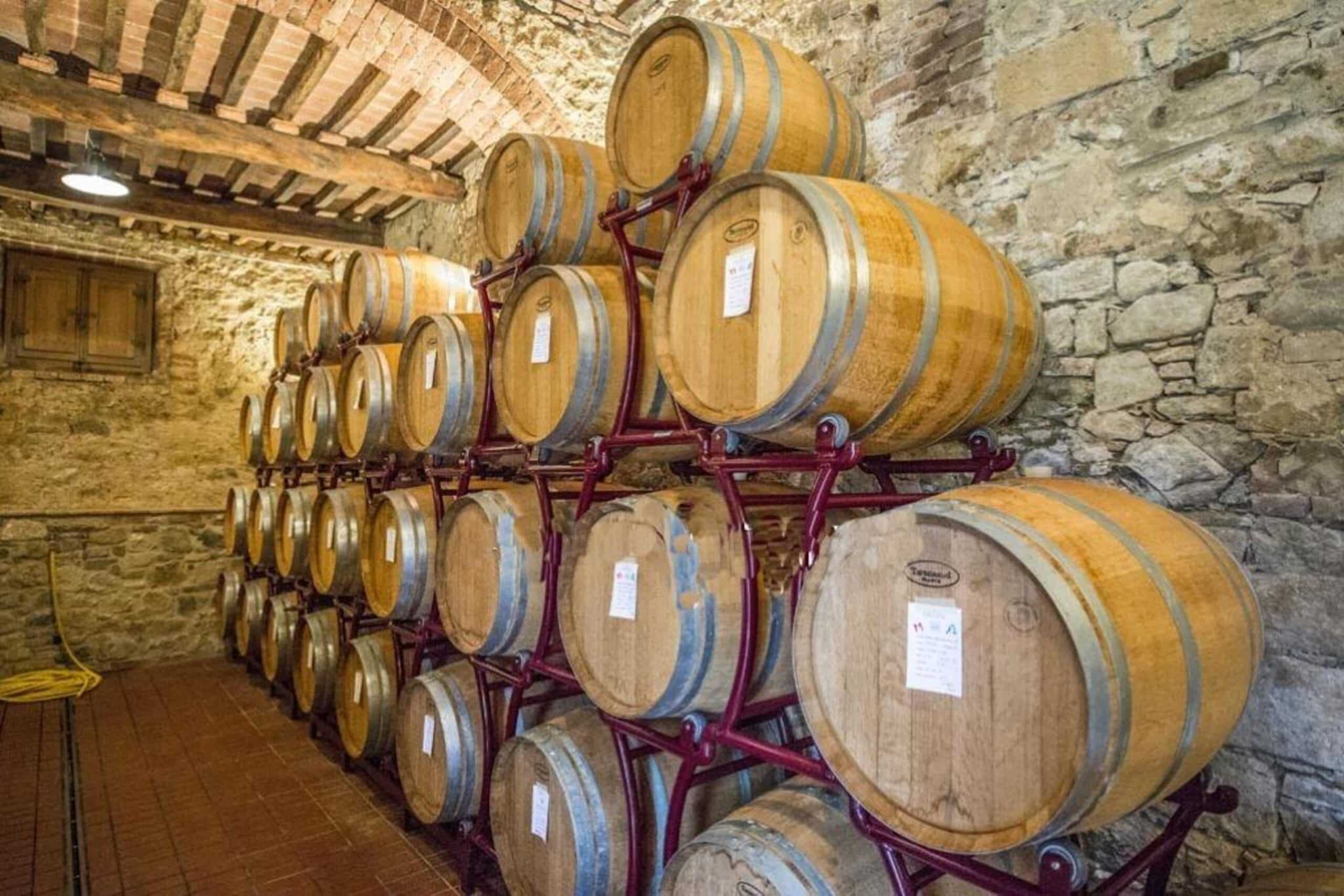
Every grape is hand-picked. Every red spends 12 months in oak barrels. Nothing added except minimal sulfites – just enough to protect the wine during oxygen exposure and handling.
The result?
Wine that tastes like this place: authentic, natural, beautiful. And it won’t punish you the next day. Promised.
That’s our philosophy. This is how we make natural Tuscan wine. The rest is just noise.
Why Organic?
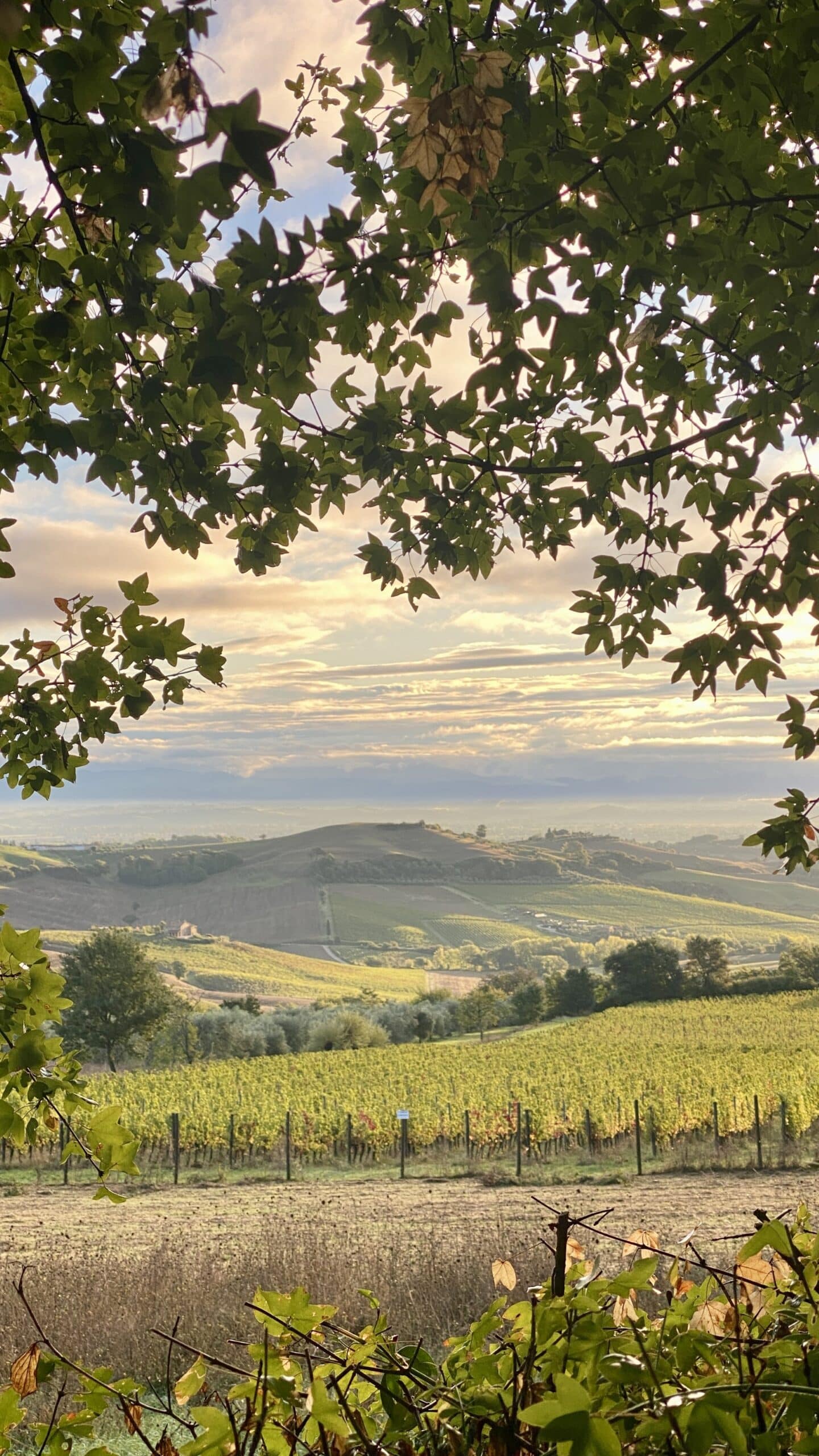
We are located in the UNESCO World Heritage Site of Val d’Orcia, in the heart of Tuscany’s most prestigious wine region. That is a privilege — and a responsibility. We didn’t buy this land to poison it.
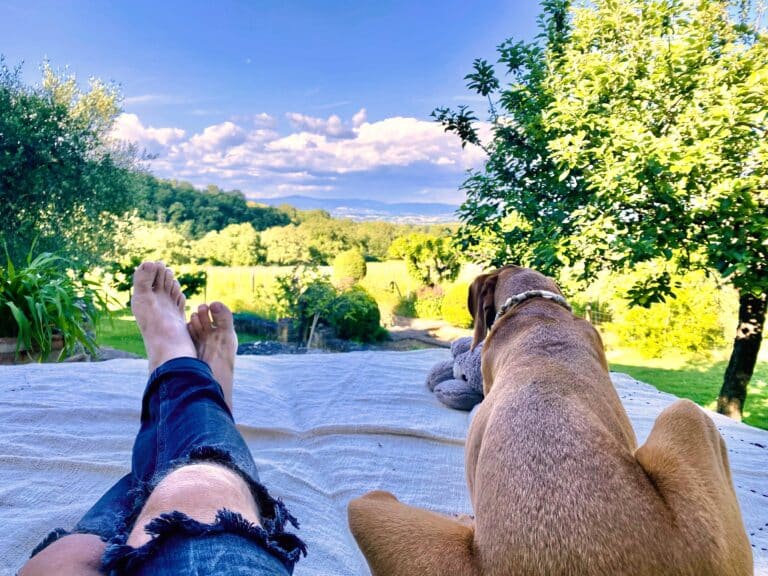
Sarah and I are Swiss. We tend to think long-term. We live 20 meters from the vines. Ruby runs through them every day. If we sprayed chemicals, we’d be spraying ourselves.
So we don’t.
What organic actually means:
We can only use copper and sulfur – natural antifungals – in strictly limited amounts (4kg per hectare per year). That’s it. No synthetic pesticides. No herbicides. No chemical fertilizers.
If bugs appear, we let nature handle it. If weeds grow, we mow them.
It’s more work. More expensive. More risk.
But we sleep better. Literally. And our wines are cleaner – in every sense of the word.
Certified since 2009:
The previous owners started the organic conversion. By the time we bought ABBADIA in 2023, the vineyards had been chemical-free for 14 years.
That matters. Soil doesn’t recover in a single season. Fourteen years means the land is genuinely healthy, not just “organic on paper.” This is true natural wine.
Tuscan Terroir - Why Location Matters
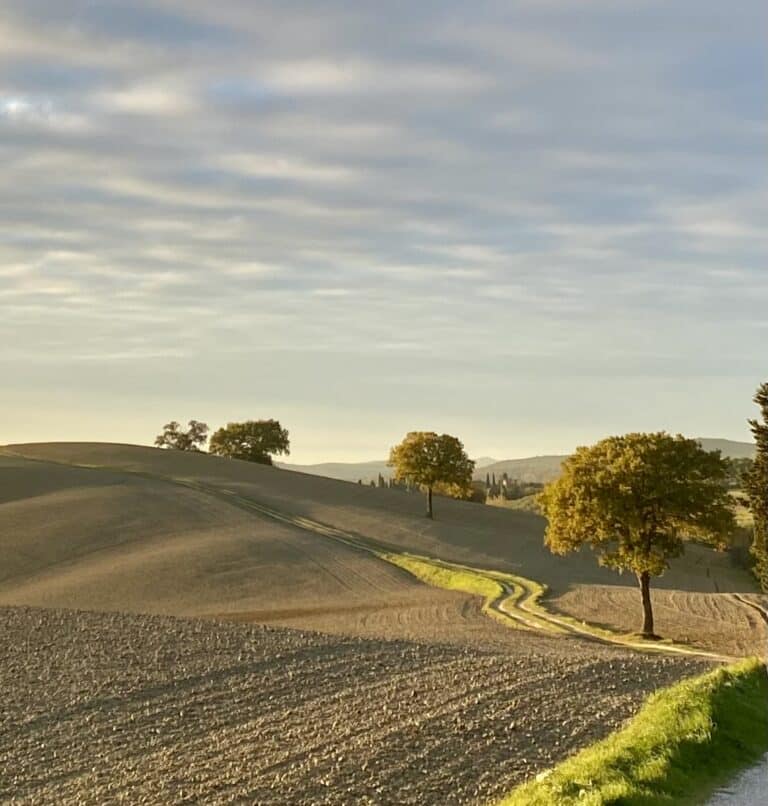
Our vineyards are located in one of Tuscany’s most prestigious wine regions, halfway between the Val d’Orcia, Pienza, and Montepulciano.
Our terroir is unique:
Clay and limestone soils. Lots of rocks mixed in. Occasional sandy layers. South-facing slopes. 400 – 450 meters elevation.
Why that’s good:
Clay: Holds water. Gives wines structure, fruit-weight, and sweetness.
Limestone: Translates into minerality. The backbone that makes wine interesting and elegant instead of just fruity.
Sandy layers: Warm quickly, add lightness and aromas to wine.
Rocks and stones: Drain water, forcing roots to dig deep for moisture. This means more concentrated grapes with powerful and complex flavors. Better wine, eventually.
South-facing slopes: Gives maximum sun exposure. Grapes ripen evenly. Sugars develop properly. Acidity stays balanced.
Elevation: cool nights preserve acidity, warm days ensure ripeness. The sweet spot for Bordeaux grape varieties in Tuscany.
Our take:
The wine quality comes from the land. We got lucky. The previous owners planted the right vines in the right place.
When we arrived, the vineyards were 21-25 years old. Perfect age. Old enough to have deep roots and complexity. Young enough to still be productive.
We didn’t create this. We inherited it. Our job is not to screw it up. And we won’t.
The Density Decision - 7,500 Vines per Hectare
Most Tuscan vineyards plant 3,000-4,000 vines per hectare.
We have 7,500.
Why it matters:
More vines per hectare equals less fruit per vine. Less yield means more concentrated flavor.
It’s the difference between an average wine and an exceptional one.
The tradeoff:
More vines means more pruning, more work, lower yields.
But it also means better wine. Always.
We make about 6,000 bottles a year from 8 hectares. That’s intentionally small. We could easily triple production by planting fewer vines and letting them overproduce.
We won’t.
Quality over quantity isn’t just a slogan here. It’s a deliberate choice.
Hand-Picked – A Tradition that Counts
Hand-picking grapes is slow, expensive, and backbreaking.
Machines are cheaper, faster, tireless.
So why hand-pick?
- Selection:
Hands can choose. Machines can’t. We only pick ripe, healthy grapes. Unripe clusters stay on the vine. Damaged grapes don’t make it to the press. - Gentleness:
Hand-picking keeps grapes intact until we’re ready to press them. No bruising, no stem breaks, no leaves. - Timing:
We pick row by row, day by day, as each section reaches perfect ripeness. Machines harvest everything at once.
The result:
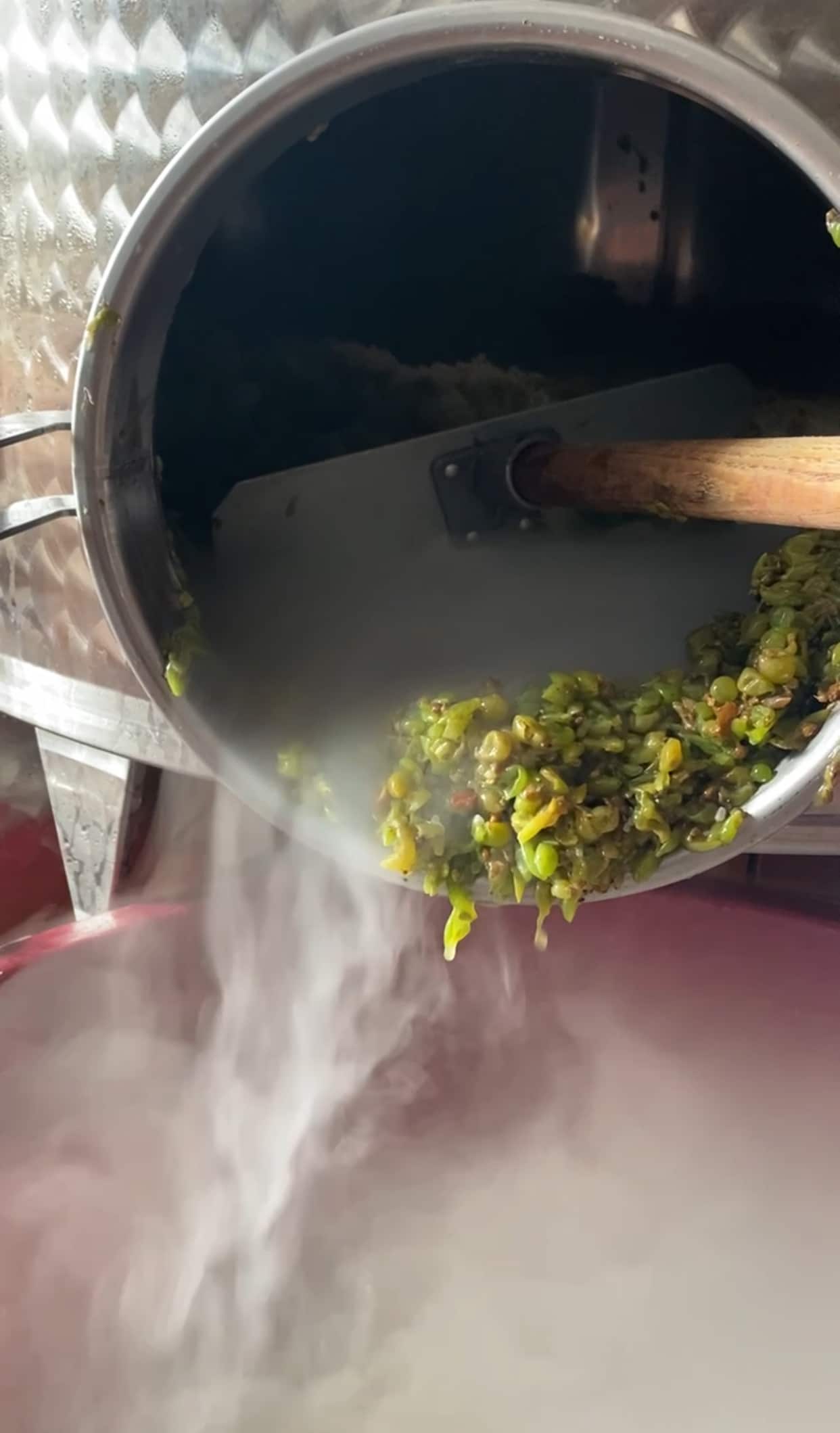
Cleaner must — the freshly pressed grape juice. Better fermentation. Fewer off-flavors.
Our take:
Some years, harvest takes two weeks. Every day, sorting, picking, carrying crates. It’s exhausting.
But every bottle is worth it. That’s the deal.
Winemaking - Minimal Intervention
Once grapes are picked, our philosophy is simple: get out of the way.
Fermentation:
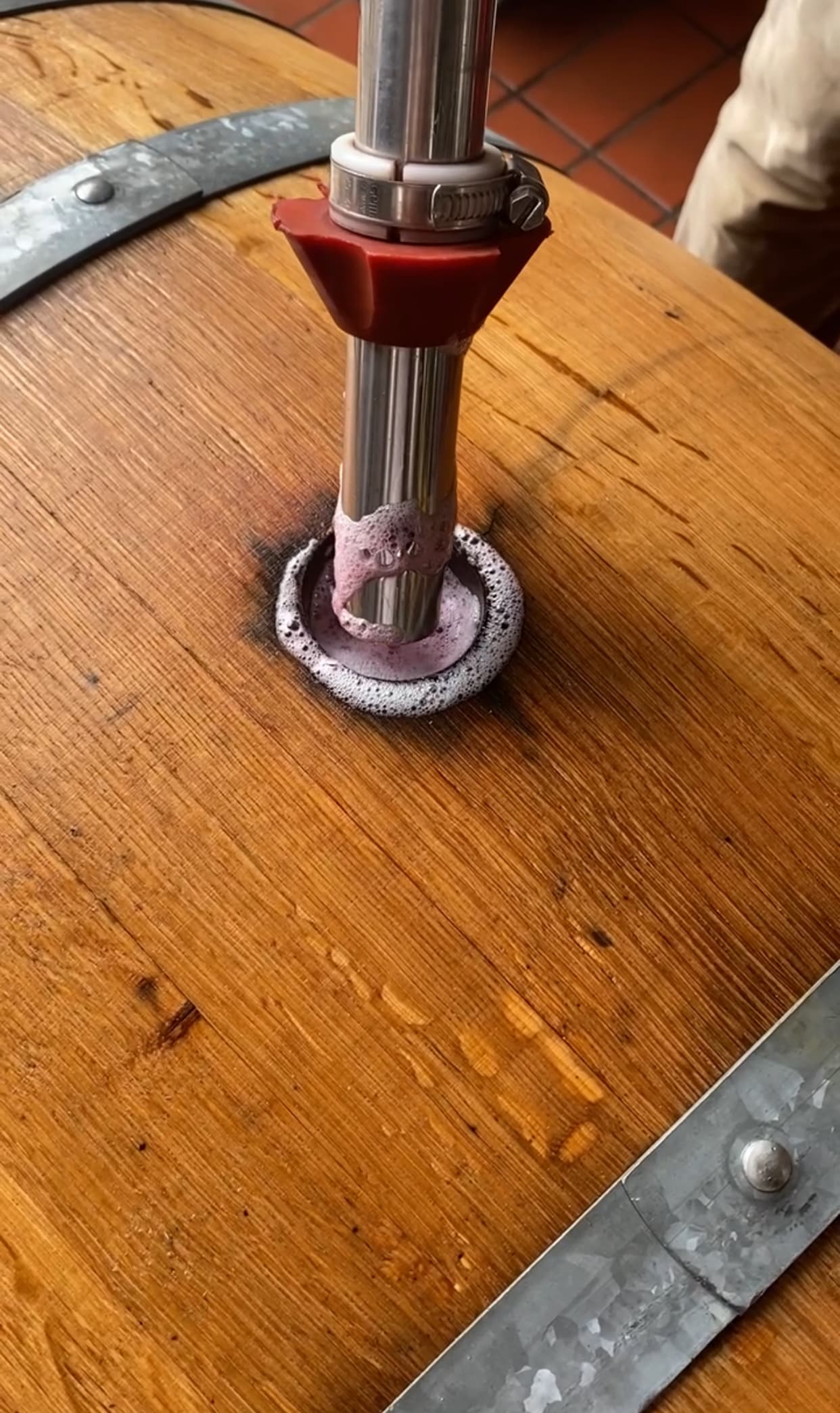
We work with natural yeasts only. This is slower. Less predictable. Sometimes fermentations can stall.
But it preserves the character – the identity of both the wine and the vintage.
Oak aging:
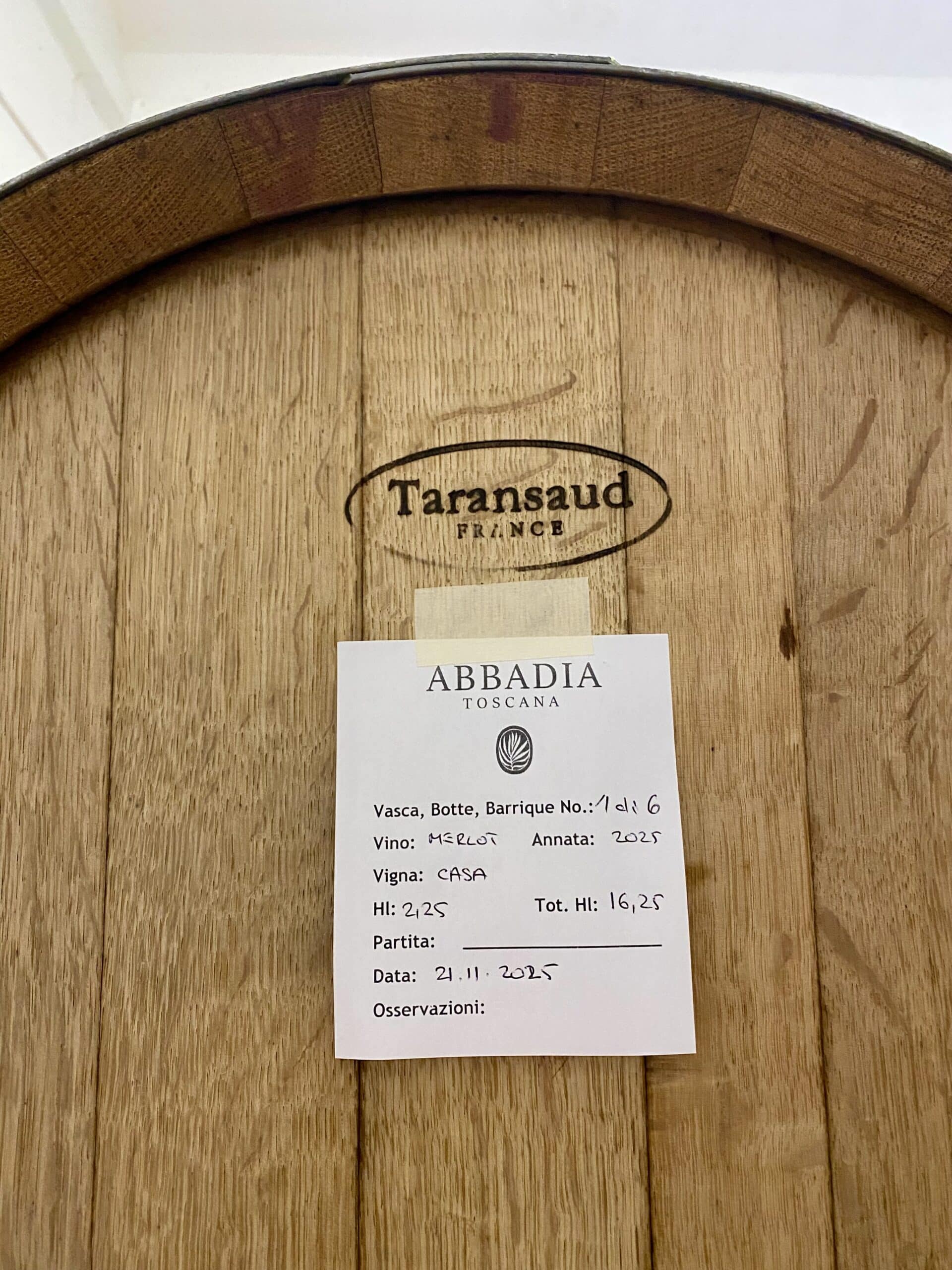
We do 12 months in French and Hungarian oak. Barriques (225 litres) and Tonneaus (500 litres).
It’s not for adding oak flavor. It’s for slow oxygen exposure which softens tannins, integrates flavors, gives wine structure and longevity.
Additives:
Almost none. Minimal sulfites when handling wine to keep it sterile. That’s it.
No enzymes. No fining agents. No flavor corrections. No sugar, no tricks.
If the grapes aren’t good enough – you shouldn’t make the wine. It’s that simple.
The result:
Not a polished, standardized style. Not engineered to taste like every other Merlot.
Ours has personality and edges. And there ARE variations between vintages.
That’s not a flaw. That’s simply nature. That’s authenticity.
What You Taste - A Symphony, Not a Solo
We will spare you the fancy wine jargon – here’s what our organic Tuscan wines actually taste like.
Merlot: smooth, rich, dark fruit, a touch of sweetness. The crowd-pleaser. Full-bodied and harmonious. The perfect match for a Tuscan Picnic.
Cabernet Sauvignon: bigger, more structured, a little spicy. Complex and elegant. Stands tall next to any dish.
Sangiovese: bright acidity, earthy, unmistakably Tuscan. Lighter in body, never in character.
Rosé: Made from Merlot – unlike traditional rosés you might know. Strong, full, with character and yet slightly sweet – and yes, almost always the ladies’ choice.
White blend: Chardonnay and Sauvignon blanc, crisp, intriguing, a little wild (the Seyval Blanc makes it unique). Perfect for hot afternoons.
The common thread:
Purity and balance. None of our wines is just “fruity” or “oaky” or “tannic.” They’re layered: fruit, acidity, tannin, minerality, oak — all playing together.
It’s natural complexity you can’t engineer.
The No-Headache Promise
People always ask why our wine doesn’t give them headaches.
We don’t know for certain. But we have theories.
- Minimal sulfites – just enough to preserve the wine.
- No additives – just grapes and time.
- Organic farming – no chemical residue.
All of the above translates into cleaner grapes and eventually cleaner wine.
Sarah and I drink our wine regularly: No headaches. No regrets.
That’s not marketing – it’s lived experience.
The Production Numbers - Why Small Matters
6,000 bottles per year.
That’s what being a true boutique winery in Tuscany means – tiny production, maximum quality. Most commercial wineries produce 50,000-500,000 bottles annually.
Here’s what small really means:
- We know every bottle
Literally. Every harvest, we’re in the vineyard. Every fermentation, we’re in the cellar. Every barrel, we taste and monitor. - Every vintage is actually different
Big wineries blend across years to keep things consistent. We don’t. 2024 tastes different than 2025. That’s honest winemaking. - We’re not trying to please everyone
We make wine we love – not wine designed for critics. If you love it too, wonderful. - It can sell out early
Some years, we’re out of certain wines by summer. Simply a reality when you make this little.
Our take: Staying small keeps the quality high. We could produce more, but the wine would suffer. So we don’t.
What This Philosophy Means for You
When you drink our wine at ABBADIA:
It’s made from grapes you can see from your window. Aged in the cellar beneath your room. Made by the same hands that will pour it for you at dinner.
This connection is what guests feel most when they taste our wines during their stay at ABBADIA.
That’s not romantic storytelling. It is how this place works.
And it matters. Wine tastes different when you understand its story. When you’ve walked the vineyard. When you’ve seen the barrels.
That’s when wine becomes a place. Our place. ABBADIA.
The Honesty Part
Not every vintage is perfect. Some years it rains too much, some years too little. Some years fermentation stretches endlessly. This is nature.
We will not blend away those differences, we won’t correct them artificially.
That’s organic winemaking.
The wine is honest about that. And so are we.
Why We Do This
Because we live here.
Because we want to create something we’re proud of. Something sustainable.
Because wine should taste like where it comes from – not like a recipe.
Our Merlot should not taste like a Merlot.
It should taste like our Merlot.
From these vines. This year. Unique.
That’s the philosophy.
Ready to Taste our Philosophy?
When you stay at ABBADIA, we’ll walk the vines with you. Show you the cellar. Explain why we do what we do.
Then we’ll pour you a glass – and let the wine speak. Because true hideaways whisper.
Welcome to our philosophy.
Welcome to Tuscan organic wine that tastes like it should.