Here’s the truth about most wine tastings: Dramatic swirls, sniffs, tiny sips, excessive slurps and fancy talks.
Yeah. We have seen this, too.
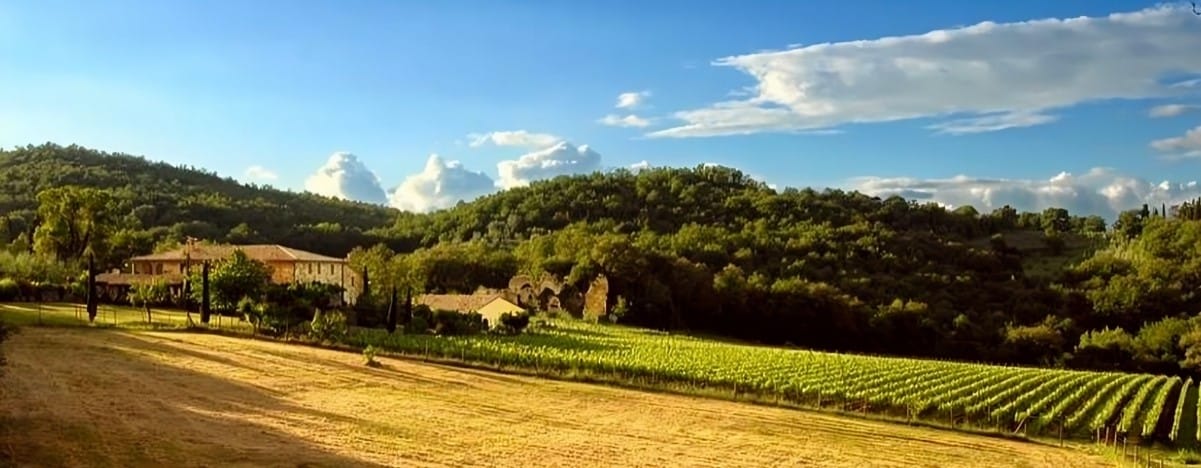
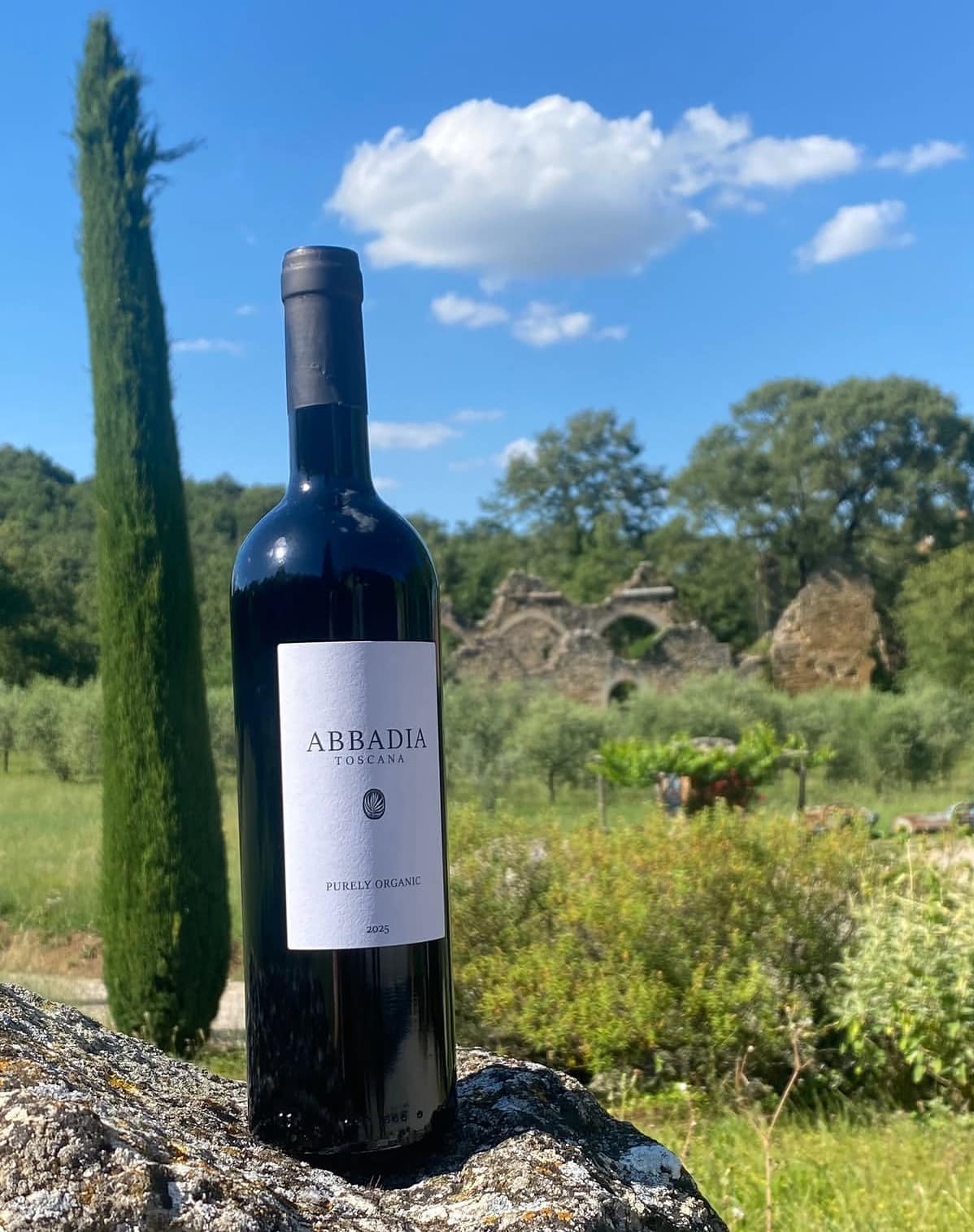
Look, we’re rather new to wine making. Sarah and I bought ABBADIA in 2023 and made our first vintage in 2025. Of course, we were building on a great base. Our vineyards were planted in 1998. Fully organic, certified since 2009. We grow Bordeaux grapes, a bit of local Sangiovese and some whites. Prime location and terroir. Decades of experience behind it.
We’re located within Tuscany’s most famous wine regions: 15 minutes from Montepulciano’s Vino Nobile cellars, 40 minutes from Montalcino’s Brunello estates.
But there is one huge difference – we approach wine making from the consumer side. To us, most of the pretentious wine talk seems exaggerated.
After two seasons, we can say that wine is not that of a complex subject after all. It’s good grapes, honest work, and just a bit of science. Of course, we want to impress – but not with jargon, with our wine instead. Our yardstick? As a private boutique winery in Tuscany it’s all about producing something that we and you will be enjoy drinking. Full stop.
But what makes a good wine? How can I tell?
Here’s our Tuscan wine tasting guide for beginners – written for couples who want to understand the gist of it.
No Jargon. No snobbery. Just what actually matters.
The Truth About Wine Tasting
What experts say:
“Elegant tertiary aromas with firm but integrated tannins”
What we say:
“This is our Sangiovese. It’s been aging 12 months in oak barrels. Tastes earthy. Goes great with meat and cheese.”
See the difference?
It is not about fancy descriptions. They’re learned. Trained. Often… awkward.
What really matters is simple: Is it light or heavy? Sweet or dry? And first and foremost: Do you like it?
That last one? That’s the only question that actually counts. We help you determine what you like.
Helpful Wine Basics
Red vs. White vs. Rosé
Red:
Grape skins stay in during fermentation for up to 20 days (that’s where the color comes from). Red has more body, is heavier. Pairs with red meat, pasta with tomato sauce, cheese.
White:
Skins removed within a day. Processed with ice. It’s crisp and sour. Pairs with fish, chicken, salads.
Rosé:
Also red grapes, but skins removed swiftly. Light, fresh and – ours – with a touch of sweet. Summer wine, endlessly versatile.
Which to drink when:
Hot day? White or rosé. Chilled.
Evening? Red. A bottle, usually.
It’s as simple as that.
Dry vs. Sweet
“Dry” essentially means: not sweet. No leftover sugar.
Most wine is dry. Even if it tastes fruity (like our Merlot), it’s still dry – you’re tasting the grape flavors, not sugar.
Sweet wine = dessert wine. Tuscany’s signature Sweet wine is Vin Santo, a kind of Tuscan Port Wine. Mainly white, but also red. Aged forever, 15 years and more. Good with chocolate or blue cheese. Or Tuscany’s almond cookies – Cantucci.
Tannins - The Thing Everyone Mentions
Tannins come from grape skins, seeds, and oak barrels. They create that slightly bitter, dry, grippy feeling in your mouth –it reminds me of drinking strong black tea.
High tannins:
Young red wines. Aged in steel tanks. They feel rough, almost harsh. Need food to balance them. But tannins vary also by grape type: Cabernet Sauvignon is high on tannins.
Low tannins:
With age, tannins get softer. By nature, Merlot is lower on tannins (ours is medium though). Easier to drink on their own.
Why it matters:
High-tannin wines pair with fatty foods (steak, aged cheese). The fat softens the tannins. Magic.
Our advice:
Don’t worry about identifying tannins too much. Just notice: does this wine feel smooth or a bit rough? That’s enough. And then remember you preference.
Two more to know: Body & Acidity
Body describes how rich and heavy the wine feels. It depends on alcohol sugar and grape extract. Merlot and Cabernet are full-bodied, whereas Sangiovese has a light one.
Acidity is the natural sourness of the grapes, think of lemon. Low-acid wines feel rounder and softer. Like Merlot. Sangiovese to the contrary is a high-acid wine, very green and crisp.
That’s all you need to remember:
Leftover sugar = sweetness (Merlot)
Tannins = grippy (Cabernet)
Body = richness (Merlot)
Acidity = freshness (Sangiovese)
Once you have established your personal preference, you will be able to buy the right wine – even without tasting it. And you will know how to select the wine for any given menu.
Our ABBADIA Wines
Our Neighbors: Vino Nobile & Brunello
We sit in a perfect spot: a stone’s throw from Montepulciano’s Vino Nobile cellars, a short drive from Montalcino’s legendary Brunello estates. Both are based on Sangiovese – the same grape we grow. The difference? Vino Nobile and Brunello are protected appellations (DOCG) for specific communes. Our Sangiovese, same grape, different commune – carries the Chianti designation (DOCG).
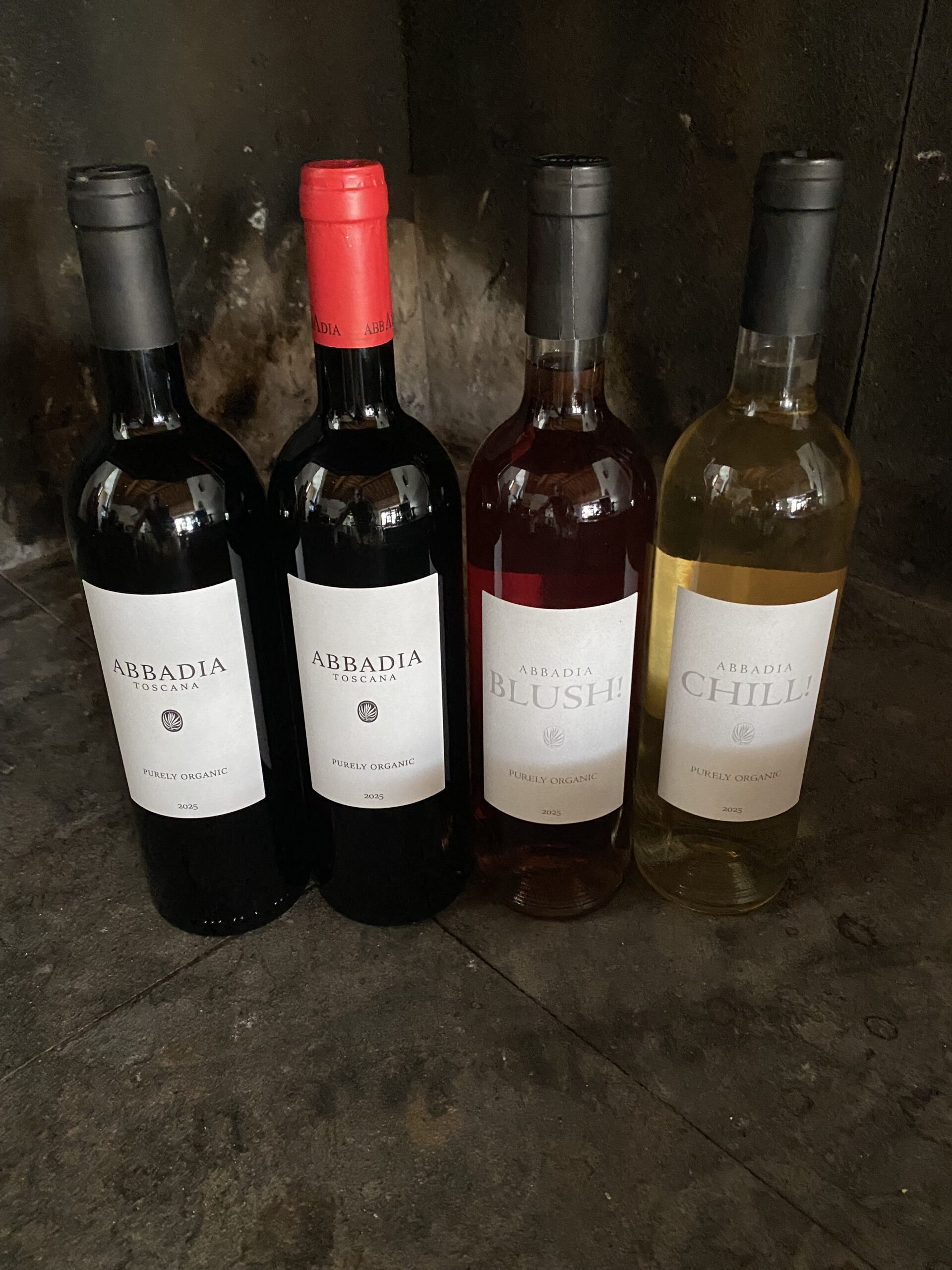
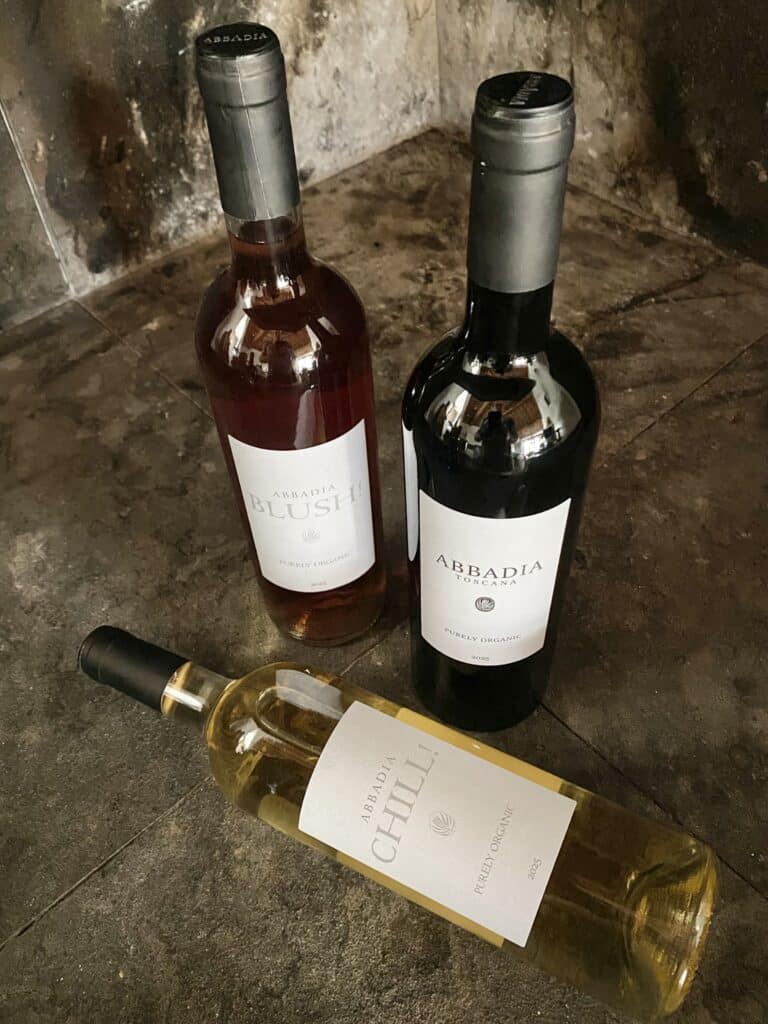
But ABBADIA is much more than just Chianti or Sangiovese. We love variety. We make three pure reds, one rosé, and one white. Here’s what they actually taste like.
ABBADIA Merlot (Red)
What wine snobs say:
“Velvety mouthfeel, ripe plum, dark berries, chocolate undertones, elegant finish.”
What we say:
Smooth. Fruity. Rich. Our most popular. Pairs with everything from pasta to pizza to mixed platters. It needs space on its own, though.
Fun fact:
We have 7,500 vines per hectare – double than most vineyards. More vines, means less grapes per plant, means more concentrated flavor. That’s why ours tastes way richer than typical Merlot. You’ll have to try it, ideally here with us at a romantic sunset picnic.
ABBADIA Cabernet Sauvignon (Red)
What wine snobs say:
“Bold structure, peppery, graphite minerality, firm tannins, age-worthy.”
What we say:
Complex. Spicier. Deep. This wine can handle strong flavors. Needs food. Loves game.
Fun fact:
Cabernet ages even better than Merlot. We have some bottles left from 2015 in our cellar that are just now hitting their peak.
ABBADIA Sangiovese (Red)
What wine snobs say:
“Bright acidity, cherry, earthy notes, savory complexity, food-friendly.”
What we say:
The Tuscan one. Lighter than Cabernet and Merlot. Tastes like this place – dusty roads, terracotta, edgy herbs. It pairs well with – surprise – Tuscan food. Salumi. Ragu. Pici pasta. Pecorino cheese.
Fun fact:
Sangiovese is THE Tuscan grape. Every famous Tuscan wine (Chianti, Brunello, Vino Nobile) is Sangiovese. Ours is a Chianti, too.
ABBADIA Rosé (from Merlot)
What wine snobs say:
“Dark pink hue, red cherry aromatics, balanced acidity, refreshing minerality, elegant sweet finish.”
What we say:
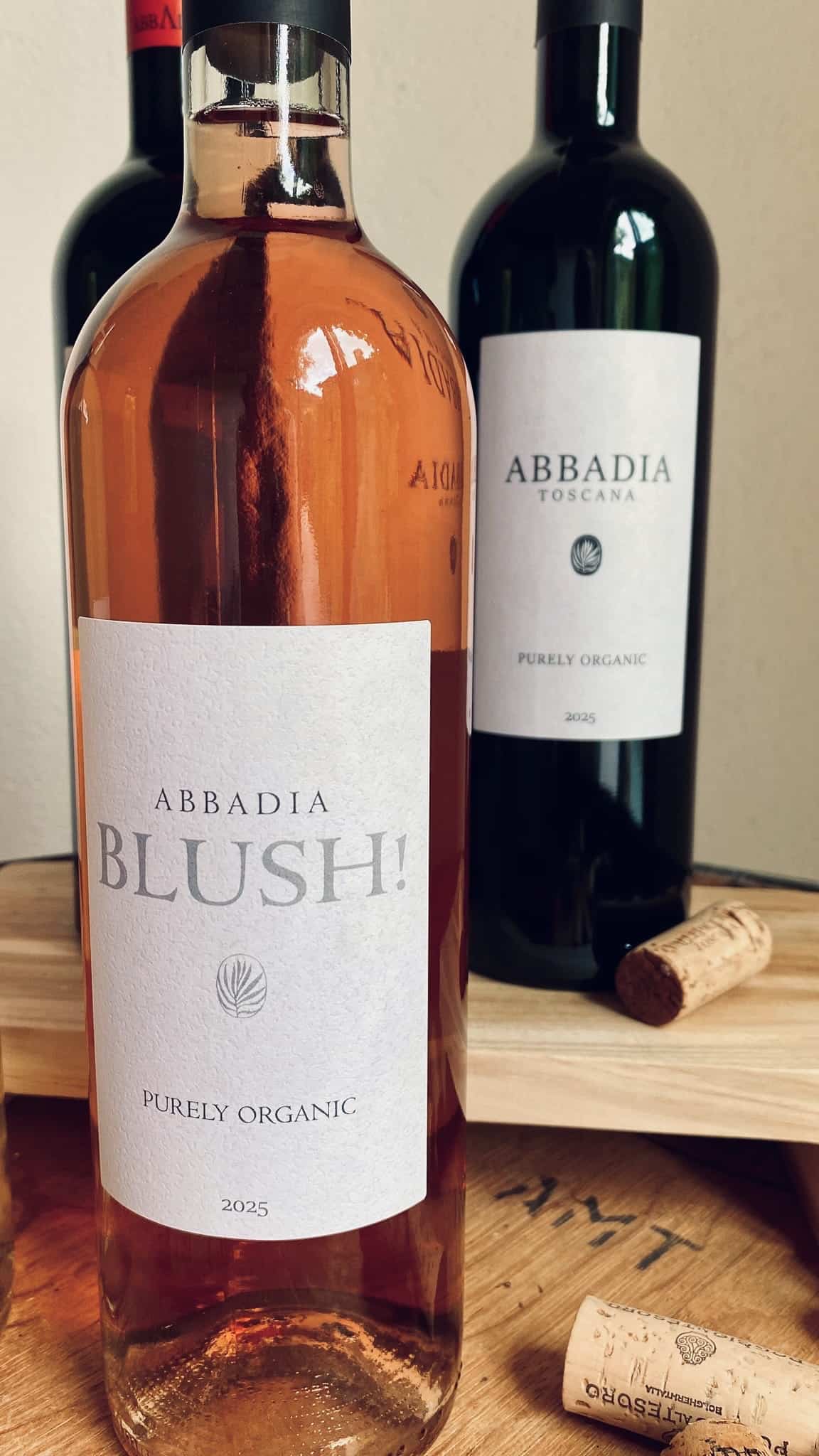
Not conventional, not pale. Rather bold, full-bodied, characterful and yet lightly sweet. Drink it chilled on hot afternoons by the pool. Aperitif hour. Or as an accompaniment to cold cuts..
Fun fact:
We make this from our Merlot grapes – same vineyard as our red, but we pull the skins out earlier. So it’s pink, not red. It’s our most versatile wine. Pairs with literally everything. Even fish. Even steak. Magic.
ABBADIA White (Blend)
What wine snobs say:
“Complex aromatic profile, multi-layered palate, terroir-driven expression.”
What we say:
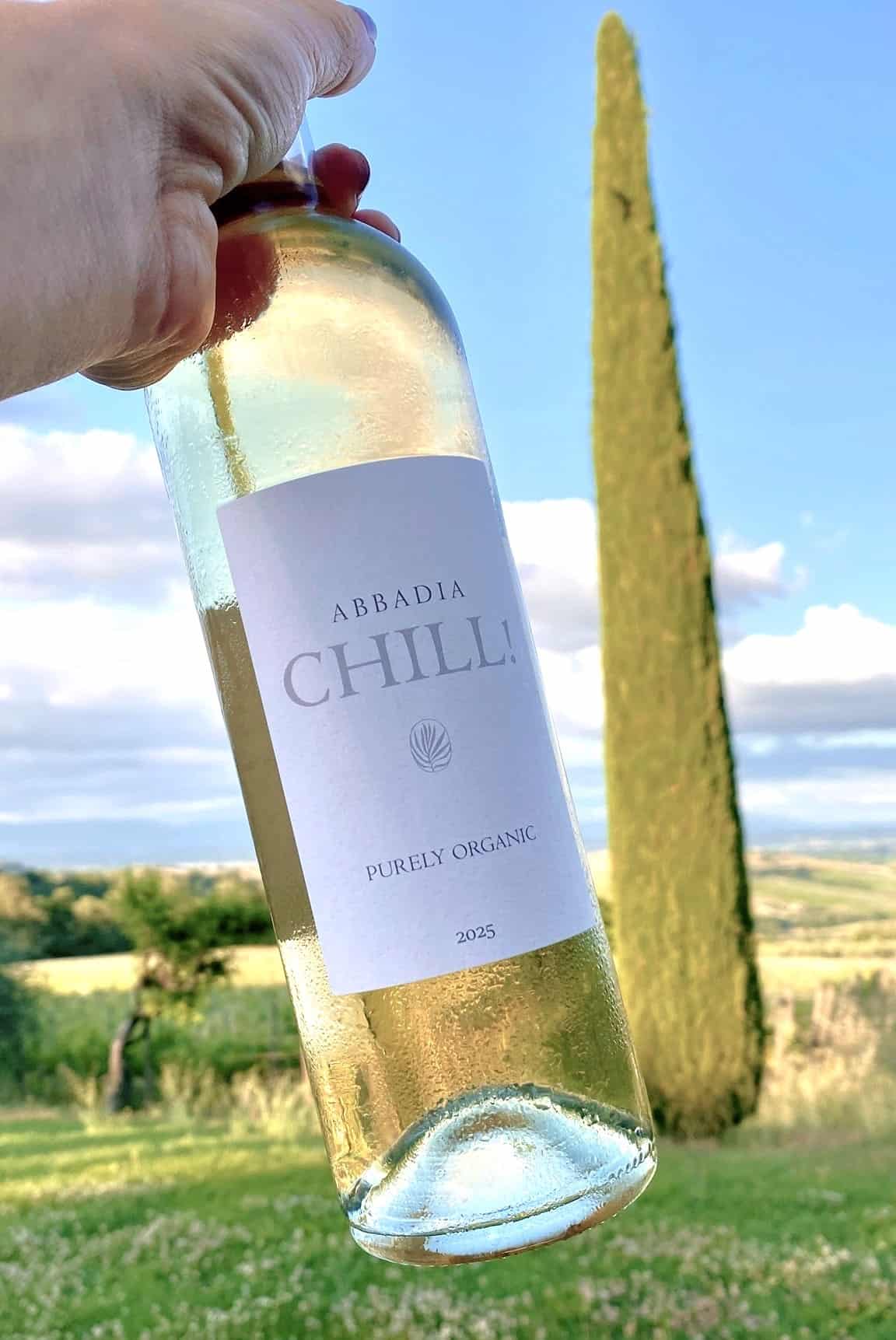
A blend of Sauvignon Blanc (think lemon), Chardonnay (pear), Seyval Blanc (pineapple). It’s crisp and fresh, interesting. Every vintage will be different depending on the grape mix. 2025 its tilted towards Sauvignon. Drink it at lunch, for aperitif or light summer dinners. When it’s too hot for red – but you want something with character.
Fun fact:
Seyval Blanc is almost unheard of in Tuscany – it’s usually grown in cold climates like England. Why we grow it here? Because we can. And it adds something – unexpected. We like it.
How to Actually Taste Wine
Some guests ask us, how they should do it. Here’s what actually works:
Step 1: Look
Hold the glass up. Look at the color.
Red wine:
- Purple-ish = young
- Ruby red = middle-aged
- Brick/brown edges = old
That’s it. No need for more.
Step 2: Smell
Stick your nose in the glass. First smell. Swirl the glass, second smell.
What you’re looking for:
- Does it smell fresh, like fruit? Then it’s younger and/or aged in steel.
- Hints of dirt, cellar, and vanilla? Older and matured in oak.
No need to sniff out dozens of aromas. It’s about finding your preference.
Pro tip – Corked wine:
Wine gone bad, is called “corked”. Yet, it doesn’t smell of cork. It’s rather like wet cardboard or vinegar and has no fruit whatsoever. It this happens, tell whoever served it. They’ll replace it. No big deal.
Step 3: Taste
Take a sip. Let it sit in your mouth for a second. Swallow.
Questions to ask yourself:
Would I drink more of this? If yes, what do I like about it?
Remember the four basic qualities:
- Sweet vs. dry (residual sugar)
- Smooth vs. grippy (tannins)?
- Light vs. heavy (body)?
- Soft vs. acidic (acidity)
Which combination feels right? That’s your wine.
And that’s it.
No need to slurp air. No need to use fancy words. Just remember what you like – and why: fresh, dry, light, soft?
Wine Pairing
Here’s what works:
Rule 1: Heavy food = heavy wine.
Cheese? Red. Cabernet or Sangiovese.
Fish? White.
Rule 2: Match the sauce, not the meat.
Chicken with cream sauce? White wine.
Chicken with tomato sauce? Red wine.
It’s all about the flavors on your plate.
Rule 3: Salty food loves wine.
Cheese. Salumi. Olives. All pair beautifully with wine because salt makes wine taste smoother.
Rule 4: Pairing is individual.
Someone likes gorgonzola with red wine because the latter turns sweet. Do the same with Pecorino fresco and you will discover the wine’s acidity. This is why we offer mixed platters with our wines – nothing more exciting than finding out which combination of cheese, meat or pickles you fancy most.
Rule 5: Drink what you enjoy.
You love red wine with fish? Then do it. Wine police don’t exist. Enjoy what you like.
Common Wine Myths (Debunked)
Myth 1: Expensive wine is better wine
Truth:
Sure, quality wine has a certain price. It’s limited volume, hand-picked, finely aged. But prices above EUR 30 hardly reflect additional quality. Expensive wine is often just good marketing, fancy labels, and artificial scarcity. We’ve had EUR 25 bottles that were delicious and EUR 150 bottles that tasted like a waste of money.
Take away: Price does not tell you a lot about taste.
Myth 2: Wine needs to breathe
Truth:
Maybe a rarity from 1982. But most wine? No. Honestly, most people can’t tell the difference. And for me personally, I love the fresh aromas after uncorking the wine.
Myth 3: Red wine with meat, white wine with fish
Truth:
It’s a guideline, not a law. Grilled tuna can handle red. Chicken in cream sauce wants white. Match the sauce, not the protein.
Myth 4: You should always finish the bottle
Truth:
Opened wine lasts 2-3 days if you cork it and put it in the fridge (yes, even red). Don’t force yourself to finish. Save it.
What We've Learned from our Couples
1. Most people prefer Merlot and Cabernet
Even if they think they’re “Sangiovese people.” Bordeaux grapes are just… fruitier. Rounder. Richer.
2. It is about having fun together
It’s not about becoming experts. It’s about discovering what you both like, disagreeing about which is better. One couple argued lengthily about whether our Sangiovese tasted “earthy” or “dusty.” They were both right. And they had a great time.
3. Wine taste is situational
Same wine, two settings:
A: Formal tasting room. Someone lecturing you. Everyone taking notes. Spitting into buckets.
B: Our romantic hideaway. The terrace at sunset. Relaxed. Laughing. Actually drinking the wine.
Which do you think tastes better? Exactly.
Questions Couples Always Ask Us
"Can I take away wine when travelling by car?"
With common sense, yes. But you should avoid hot temperatures. Don’t put the carton in the trunk, it heats up faster than the cabin. Park in shaded areas and ideally take the carton into your hotel room. If not possible, wrap in towels or insulated bags.
"Can you ship wine?"
Depends on the country. Switzerland and most of Europe? Yes. Other regions might get complicated. Ask us, and we’ll figure it out.
"Is organic wine better?"
Better for the land? Definitely. Better for you? For sure – fewer chemicals. Better tasting? Debatable (though we’d say yes).
We went organic because it felt right for this place. The vines, the soil, the ecosystem. And we have never experienced a headache after drinking our wines. Can’t say this for many premium wines we have drank. This says it all…
The Only Wine Advice You Actually Need
- Drink what you like
Not what the wine critic recommends. Drink what actually makes you happy. - Wine is meant to be drunk
Don’t save the “good bottle” forever. Open it. Share it with someone you love. That’s what it’s for. - You don’t need to be an expert to enjoy wine
You don’t need a degree in oenology. You just need to pour a glass and decide: is this good? - The best wine?
With the right person. In the right place. At the right moment.
Everything else? Just details.
Ready to Start Enjoying?
Then let’s get in touch: We have wine. We have time. We have beautiful rooms. We have silence. And we have a terrace with views that make every wine taste better. This is what makes ABBADIA a true Silent Luxury Hideaway.
We promise: No swirling competitions. No jargon. No pressure to detect “hints of saddle leather.”
Just honest, fine wine. And the admission that sometimes, it’s just the perfect moment that makes the wine taste great.
See you soon!
Welcome to ABBADIA.
Welcome to honest, fine wine.